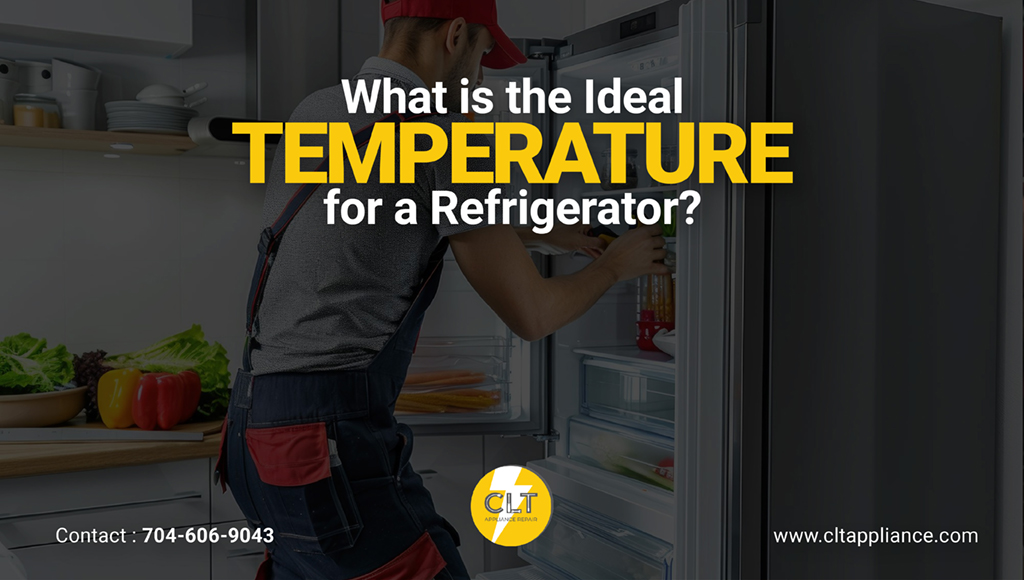
Reach into your fridge for a carton that expired days after you bought it, or pull a bag of salad from the back that has frozen stiff, and you run into the same question: what should the temperature actually be set to? A dial controls most refrigerators, marked one to five with no temperature on it, and is set once when the appliance is installed. A unit running a few degrees too warm quietly shortens how long food stays safe, while one running too cold freezes fresh produce and pushes up your energy bill.
The ideal refrigerator temperature is 37°F (3°C), with the freezer at 0°F (-18°C). That setting sits comfortably below the food-safety limit while remaining above the freezing point. The margin between those two extremes is narrow, which is why the exact number matters.
The Ideal Refrigerator and Freezer Temperature
The safe operating range for a refrigerator is narrow, and a handful of numbers cover everything you need to set it correctly. The table below lists the target and the limits, and the explanation that follows shows why the target sits where it does.
Quick-Reference Temperatures
| Setting | Temperature | Purpose |
| Ideal refrigerator temperature | 37°F (3°C) | keeps food safe with margin to spare |
| Safe refrigerator range | 35°F to 38°F | acceptable band for most units |
| Maximum safe temperature | 40°F (4°C) | the ceiling before bacteria multiply |
| Ideal freezer temperature | 0°F (-18°C) | long-term storage and food quality |
Why 37°F Is the Target, Not 40°F
Food-safety guidance sets 40°F as the maximum safe temperature, but that number is a ceiling rather than a goal. A refrigerator set right at 40°F has no room for error, because the interior warms every time the door opens or fresh groceries go in. Setting the dial to 37°F builds in a few degrees of margin, which keeps the cabinet safely below 40°F through normal daily use.
Food Safety Sets the Upper Limit
The upper limit is the number that carries the most weight, because crossing it is what puts food at risk. The reason sits in how bacteria behave at different temperatures.
The Danger Zone Explained
The CDC defines the range between 40°F and 140°F as the danger zone, the band in which bacteria on perishable food multiply fastest. Within that range, the bacteria that cause foodborne illness can double in number in as little as 20 minutes. A refrigerator held at or below 40°F keeps food beneath that zone, which slows bacterial growth to a safe rate rather than stopping it entirely.
How Long Food Lasts Above 40°F
Perishable food held above 40°F for more than two hours is no longer considered safe to eat. The warning matters because spoilage is not always visible, since the bacteria that cause illness are different from the ones that produce off smells and flavors. Perishable food exposed to unsafe temperatures for more than two hours can harbor harmful bacteria, even if it appears fresh.
Keep in Mind:
During a power outage, an unopened refrigerator holds a safe temperature for about four hours. Keeping the door shut is the single most effective way to protect food until the power returns.
Cold Extremes Freeze Food and Raise Bills
The range has a lower boundary as well as an upper one, and pushing the temperature too low creates problems of its own. Two of them appear quickly.
- Frozen produce and eggs: Below about 34°F, water-rich foods near the coldest part of the cabinet begin to freeze, which ruins the texture of salad leaves, berries, and other fresh items
- Higher running costs: Every degree colder than necessary draws more electricity without adding any food-safety benefit
Holding the refrigerator at 37°F avoids both outcomes, keeping food safely cold while staying above the freezing point of most food and drink.
Temperature Varies From Shelf to Shelf
A refrigerator does not hold one uniform temperature from top to bottom. Cold air is denser than warm air and sinks, and the cooling element usually sits at the back, which leaves clear temperature differences between the shelves, the drawers, and the door. Storing food according to those differences is the simplest way to extend its life.
The Coldest and Warmest Zones
The pattern is consistent across most models:
- Back and bottom shelves: The coldest area of the cabinet
- Middle shelves: A steady, even temperature
- Upper shelves: Slightly warmer than the middle
- The door shelves: The warmest zone, and the most variable, because they meet room air every time the door opens
Where to Store Food for the Longest Life
Matching food to the right zone keeps the most perishable items in the coldest, most stable positions.
The Cold Zone: Meat, Dairy, and Eggs
The bottom and back of the cabinet stay coldest, which makes them the right place for the items that spoil fastest:
- Raw meat, poultry, and fish on the bottom shelf, where any drips cannot reach other food
- Milk, cheese, and eggs on a lower or middle shelf rather than the door
The Warm Zone: Condiments and Drinks
The door and upper shelves run warmer and change more with use, which suits items that resist spoiling:
- Condiments, dressings, and juice on the door shelves
- Drinks and ready-to-eat snacks on the upper shelves
Freezer Temperature and Why Zero Is the Standard
The freezer operates as part of the same system, and its target is a firm 0°F (-18°C). The FDA recommends 0°F for the freezer, a temperature cold enough to store food safely for months while preserving its quality.
At 0°F, food remains safe to eat indefinitely, though its flavor and texture gradually decline with time. A freezer running warmer than 0°F still keeps food frozen, but larger ice crystals form inside it and rupture the cell structure, which causes meat and vegetables to lose moisture and turn soft once thawed. Running the freezer colder than 0°F offers no safety or quality benefit and only increases energy use.
Common Reasons a Refrigerator Runs Warm
A refrigerator can hold a warm temperature even with the dial set correctly, and the cause usually falls into one of two groups. Some are simple to check and correct without any tools, while others involve a component that needs professional attention.
Simple Fixes You Can Check Yourself
Start with the causes that require nothing more than a look and a small adjustment:
- An overpacked cabinet: Cold air has to circulate to cool evenly, and overcrowded shelves block that airflow
- A door left open or ajar: Frequent or prolonged opening lets warm room air in and raises the interior temperature
- A recent load of warm food: Placing large amounts of hot food inside at once lifts the temperature until the unit catches up
Faults That Need a Technician
When the basics check out, and the refrigerator still runs warm, the cause is usually mechanical:
- A worn door gasket: A cracked or loose seal lets cold air escape around the door, and the unit cannot maintain its temperature
- Dirty condenser coils: Coils caked in dust cannot release heat efficiently, which forces the unit to work harder and still fall short
- A failed thermostat, fan, or compressor: When a core component fails, the refrigerator cannot reach or hold its set temperature regardless of the dial
When the fault is mechanical, a refrigerator running warm puts everything inside it at risk, and the problem rarely resolves on its own. We repair refrigerators throughout Charlotte with same-day service seven days a week.
You can book a visit online in a couple of minutes.
How to Set and Check the Temperature
Most refrigerators show a dial numbered one to five, or a scale from cold to coldest, rather than an actual temperature. Those settings adjust the cooling output, but they do not tell you the temperature inside, which is why an inexpensive appliance thermometer is the only reliable way to confirm it.
- Place an appliance thermometer: Stand it in a glass of water and set it on a middle shelf, where it measures the temperature of the food rather than the air.
- Wait a full 24 hours: Keep the door closed as much as possible, which lets the reading settle at the true running temperature.
- Read and adjust: If the reading sits above 38°F or below 35°F, move the dial one step and wait another 24 hours before checking again.
- Recheck after major changes: Confirm the temperature again after a large grocery delivery or a period of hot weather, since both make the unit work harder.
FAQs
Does a full refrigerator stay colder than an empty one?
Yes, a well-stocked refrigerator holds its temperature better than an empty one. The food and drinks act as a cold mass that helps the interior recover quickly each time the door opens. An overpacked cabinet is a problem, though, since it blocks the airflow the unit needs.
Why is my refrigerator warm while the freezer stays cold?
A warm refrigerator with a cold freezer usually points to an airflow fault rather than a temperature setting. The evaporator fan or the damper that moves cold air from the freezer into the fridge may have failed. A technician can confirm which part is at fault and replace it.
Should I lower the refrigerator temperature in summer?
Usually not, if the refrigerator already holds a steady 37°F. A hot kitchen makes the unit work harder, but the target temperature stays the same year-round. Check it with a thermometer during a heat wave, and adjust the dial only if the reading climbs above 40°F.
Why does my refrigerator keep freezing my food?
Food freezing in the refrigerator usually means the temperature is set too low or the cold air is not distributed evenly. Move the dial up a step, and keep delicate items off the coldest back wall. Give it a day to settle before deciding whether it is fixed.
How long does a refrigerator take to get cold after being turned on?
A new or recently unplugged refrigerator takes about 24 hours to reach a stable 37°F. Wait for it to fully cool before loading it with a large amount of food, since a warm cabinet packed with groceries takes even longer to catch up. An appliance thermometer confirms when it is ready.
Takeaway
The ideal refrigerator temperature is 37°F, with the freezer at 0°F, and an inexpensive thermometer is all it takes to confirm your unit is holding it. When a refrigerator will not stay at that temperature, the cost of spoiled food mounts quickly, and a unit running warm usually signals a fault that worsens the longer it goes unaddressed.
If adjusting the temperature settings and basic troubleshooting do not solve the problem, CLT Appliance Repair can diagnose the cause and restore your refrigerator to proper working order. Whether the issue is a faulty thermostat, damaged sensor, airflow restriction, or another cooling system fault, our technicians can identify the problem and complete the necessary repair. Book your refrigerator repair online, and we’ll help get your fridge back to a safe, consistent temperature.
Author

- John Bennett is a seasoned appliance repair specialist at CLT Appliance Repair, where he brings over a decade of technical expertise and a strong commitment to customer satisfaction. With a background in electrical and mechanical systems, John has built a reputation for reliable, efficient, and honest repair services across a wide range of household appliances-including refrigerators, washing machines, ovens, and more.