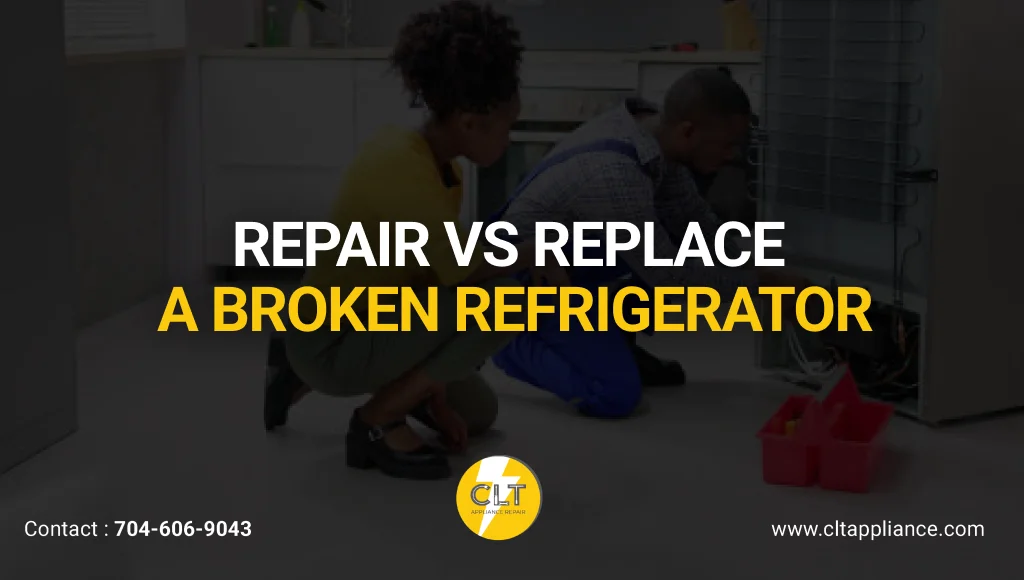
Deciding between repairing and replacing a damaged refrigerator depends on three key factors: age, repair cost, and frequency of problems. The golden rule is simple: if repair costs exceed 50% of a new unit’s price, replacement makes sense. Refrigerators under 8 years old with minor issues are usually worth repairing, while units over 10 years old with major problems should be replaced.
- Refrigerators typically last 10-15 years with proper maintenance
- Minor repairs like gasket replacement or thermostat issues are cost-effective
- Major failures like compressor problems often signal it’s time for replacement
Your fridge suddenly goes silent, and panic sets in. Milk goes sour, leftovers spoil, and the freezer turns into a soggy mess. Most households face this at some point, forced to choose between repair bills and the cost of a new fridge.
A functioning refrigerator anchors every kitchen, keeping food fresh and families fed. When that broken refrigerator disrupts daily life, knowing whether to fix or replace it becomes crucial. In many cases, timely refrigerator repair can restore performance and extend the appliance’s lifespan. Choosing wrong wastes money and stress, while choosing right saves both.
Get a free consultation to evaluate your refrigerator issues. Our certified technicians assess whether repair or replacement makes financial sense for your specific situation.
How Long Do Refrigerators Typically Last?
Most refrigerators last between 10 to 15 years with regular use and proper maintenance. This lifespan can vary significantly based on several factors that directly impact your appliance’s longevity.
Brand, model, and build quality play a big role in how long your fridge lasts. Premium brands with solid construction typically outlast budget models by 3-5 years.
Key factors affecting refrigerator lifespan:
- Usage frequency: Large families put more stress on refrigerators than smaller households
- Maintenance routine: Regular cleaning of coils and seals extends life significantly
- Installation quality: Proper leveling and ventilation prevent premature wear
- Environmental conditions: Hot, humid kitchens reduce appliance lifespan
- Power fluctuations: Electrical surges can damage internal components over time
Regular maintenance can extend your refrigerator’s life by 2-3 years. Simple tasks like cleaning condenser coils every six months and checking door seals annually make a substantial difference in performance and longevity.
Common Refrigerator Problems
Understanding common issues helps you determine whether your damaged refrigerator needs minor repairs or a complete replacement. Some problems are quick fixes, while others signal deeper mechanical failures.
Temperature Control Issues
This is the most common refrigerator issue. Your refrigerator might run too warm, freeze everything, or struggle to maintain consistent temperatures throughout different compartments.
Water issues are some of the most annoying fridge problems:
- Internal leaks: Water pooling inside compartments or under crisper drawers
- External leaks: Water dripping from underneath the unit onto your floor
- Frost buildup: Excessive ice formation in freezer compartments
- Drainage clogs: Blocked drain holes, causing water accumulation
Noisy Operation
Unusual grinding, clicking, or buzzing sounds often point to worn fan motors or compressor trouble.
Electrical Malfunctions
Electrical malfunctions often affect ice makers and water dispensers. These features rely on multiple components working together, making them prone to various failure points that may require professional diagnosis.
The Repair vs. Replace Rule of Thumb
The 50% rule provides a simple guideline for making repair decisions. If fixing your refrigerator costs more than half the price of a comparable new unit, replacement usually makes better financial sense.
Here’s an easy age-based cheat sheet:
- Under 5 years: Almost always worth repairing, especially if under warranty
- 5-8 years: Repair for minor to moderate issues, evaluate major problems carefully
- 8-10 years: Consider replacement for expensive repairs over $400
- Over 10 years: Replacement typically offers better long-term value
This helps you avoid spending more on a fridge that’s already near the end of its life. However, other factors like energy efficiency and reliability should influence your final decision.
Modern refrigerators offer significant energy savings compared to models from 10+ years ago. Factor these ongoing savings into your replacement calculations, as they can offset higher upfront costs within a few years.
Frequent breakdowns drain both time and money. CLT Appliance Repair provides comprehensive diagnostic services to identify root causes, followed by complete equipment repair.
When Repair Makes Sense
Repairing your broken refrigerator becomes the smart choice when dealing with specific types of problems and circumstances. Minor mechanical issues often have straightforward, cost-effective solutions.
Door seal problems represent the most common repairable issue. Worn gaskets allow cool air to escape, forcing your refrigerator to work harder and increasing energy bills.
Cost-effective repairs typically include:
- Thermostat replacement: Usually costs $100-200 and restores temperature control
- Fan motor issues: Condenser and evaporator fan repairs range from $150-300
- Drain line cleaning: Professional cleaning resolves water backup problems for $100-150
- Control board replacement: Electronic controls can be replaced for $200-400
- Defrost system repairs: Fixing the automatic defrost typically costs $150-250
Warranty coverage makes repairs especially attractive. If your refrigerator is still under manufacturer warranty, most repairs cost only labor charges or may be completely free.
Once your fridge hits 12–15 years, replacement is usually the smarter move. The remaining lifespan justifies the investment, and addressing problems early prevents more expensive complications later.
When Replacement Is the Better Choice
Certain situations clearly favor replacing your damaged refrigerator over attempting repairs. Major system failures often cost more to fix than the appliance is worth.
Compressor failure represents the most expensive repair scenario. Replacing a compressor typically costs $500-800 plus labor, often exceeding 50% of a new refrigerator’s price.
Clear replacement indicators:
- Multiple recent repairs: Three or more repairs in a year often signal it’s time to replace
- Refrigerant leaks: Sealed system repairs are expensive and may fail again
- Electrical system damage: Widespread electrical problems require extensive work
- Cabinet damage: Rust, cracks, or structural issues compromise food safety
- Energy inefficiency: Dramatically higher utility bills despite normal usage
Age-related replacement makes sense when refrigerators reach 12-15 years old. Even if repairs seem affordable, aging units become increasingly unreliable and inefficient. Frequent service calls create ongoing inconvenience and expense. If you’re calling repair technicians regularly, replacement eliminates recurring problems and provides peace of mind with warranty protection.
Cost Considerations
Understanding repair and replacement costs helps you make informed financial decisions about your broken refrigerator. Price ranges vary significantly based on problem complexity and refrigerator type.
Typical repair cost ranges:
- Minor repairs: $100-250 (gaskets, thermostats, small motors)
- Moderate repairs: $250-450 (control boards, larger motors, defrost systems)
- Major repairs: $450-800 (compressors, sealed system work)
- Emergency service: Add $100-150 for after-hours or weekend calls
New refrigerator price ranges span from basic to premium options. Budget models start around $500-800, while mid-range units cost $800-1500. Premium refrigerators with advanced features can exceed $3000-5000.
Energy efficiency savings provide ongoing benefits with newer models. ENERGY STAR certified refrigerators use 15-20% less electricity than standard models, saving $50-100 annually on utility bills.
Consider the total cost over the next 5–10 years, including repairs, energy use, and reliability, before deciding.
DIY Checks Before Calling a Technician
Before assuming your damaged refrigerator needs professional attention, perform these simple diagnostic checks. Many apparent failures have easy solutions that save you service call expenses.
Condenser coil cleaning
This resolves many cooling problems. Dirty coils force your refrigerator to work harder, leading to poor cooling and higher energy consumption.
Basic troubleshooting steps:
- Check power connections: Ensure the unit is plugged in securely and receiving power
- Inspect door seals: Look for cracks, tears, or warping that allow cold air to escape
- Test temperature settings: Verify controls haven’t been accidentally adjusted
- Clear vents: Remove any items blocking air circulation inside compartments
- Listen for unusual sounds: Note any new grinding, clicking, or buzzing noises
Door seal inspection
This step takes just minutes, but it can identify major efficiency problems. Close a dollar bill in the door. If it pulls out easily, the seal needs attention.
Temperature monitoring
It helps identify cooling patterns. Use a separate thermometer to verify actual temperatures match your settings. Refrigerators should maintain 35-38°F, while freezers need 0-5°F.
Pro Tip: Place a glass of water in your refrigerator overnight. If ice crystals form, your temperature is too cold and wasting energy. If the water feels warm, cooling problems exist that need attention.
Simple maintenance
It prevents many expensive repairs. Monthly cleaning, quarterly coil maintenance, and annual seal inspection keep refrigerators running efficiently for years longer.
Bottom Line
Choosing between repairing and replacing your broken refrigerator comes down to age, cost, and reliability factors. The 50% rule provides excellent guidance: if appliance repair costs more than half of a replacement unit’s price, buying new makes financial sense. Refrigerators under 8 years old with minor problems usually benefit from professional appliance repair, while units over 10 years old with major failures typically need replacement.
Consider energy efficiency, warranty coverage, and your family’s changing needs when making this important decision. Simple maintenance and DIY checks can prevent many problems and extend your refrigerator’s lifespan significantly.
Get Honest Help With Your Refrigerator Decision
At CLT Appliance Repair, we understand how frustrating appliance breakdowns can be. Our certified technicians provide honest assessments and quality repairs for all major refrigerator brands. With active service available and transparent pricing, we help you make the right decision for your home and budget.
Don’t put up with a broken fridge any longer. Contact CLT Appliance Repair today for professional solutions you can trust.
Frequently Asked Questions
What is the average lifespan of a refrigerator?
The average refrigerator lasts about 10 to 15 years, and models older than 10 years are usually better replaced than repaired.
How do I decide if my refrigerator is worth repairing?
If repair costs are less than 50% of the price of a new unit and your fridge is under 10 years old, repairing is generally recommended. Otherwise, replacement often makes more sense.
What are common refrigerator problems that can be repaired?
Common repairable issues include broken door seals, faulty thermostats, minor leaks, and noisy motors, while major failures like compressors can be costly to fix.
Should I replace my fridge if it’s not cooling properly?
If your fridge is not cooling well despite repairs or is over 10 years old with repeated problems, it is usually best to replace it.
Is it cheaper to repair or replace a refrigerator?
Simple repairs are usually affordable, but if multiple components fail or repair costs approach half the replacement price, buying new is typically cheaper long term.
Can I fix my refrigerator myself, or do I need a professional?
Basic repairs like replacing door seals or shelves are possible for DIY, but complex issues such as compressor or electrical problems should be handled by a professional technician.
Author

- John Bennett is a seasoned appliance repair specialist at CLT Appliance Repair, where he brings over a decade of technical expertise and a strong commitment to customer satisfaction. With a background in electrical and mechanical systems, John has built a reputation for reliable, efficient, and honest repair services across a wide range of household appliances-including refrigerators, washing machines, ovens, and more.