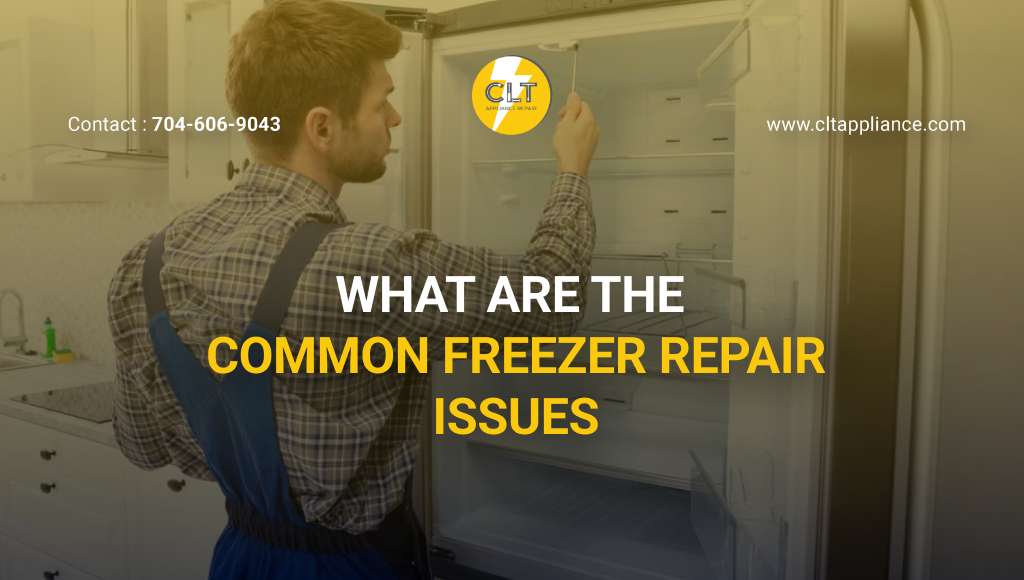
A freezer rarely quits without warning. It drops hints first, like ice cream that stays soft, frost creeping up the walls, or a compressor humming longer than it used to. Most people shrug these off until the food starts thawing, and by then, a simple freezer repair has often turned into an expensive one.
Freezers also fail more often than people expect, and the cost usually lands on you. Food waste already costs the average American about $728 a year, and spoilage is one of its biggest drivers. A freezer that slowly loses its chill only pushes that number higher. The upside is that most issues show up early, and many come with simple fixes you can try before spending a cent.
Major Warning Signs Your Freezer Needs Repair
Your freezer usually signals trouble long before it stops working for good. Catching these signs early often means a faster and cheaper fix.
Keep an eye out for these symptoms:
- Food that no longer stays fully frozen
- Heavy frost or ice building up inside
- The unit running constantly and never cycling off
- Water pooling under or around the freezer
- Odd noises such as buzzing, clicking, or knocking
- Freezer burn showing up on your food
If any of these sound familiar, the sections below explain what is likely going on.
6 Common Freezer Repair Issues and How to Fix Each
Most freezer problems fall into a short list of common issues. Here is each one with its likely cause and the steps to fix it.
1. Freezer Not Cold Enough or Not Freezing
The most common complaint is a freezer that runs but never gets cold enough. This usually comes down to dirty condenser coils, a failing evaporator fan, or a thermostat set too high. Blocked interior vents can cause it too, since they stop cold air from circulating.
Try these steps to get it cooling again:
- Set the temperature to 0°F and give it a full 24 hours
- Clean the condenser coils at the back or underneath the unit
- Clear any food or packaging blocking the interior vents
If it still will not reach temperature after a coil cleaning and a full day, the evaporator fan or sealed system is the likely cause. Both need a professional to diagnose and repair safely.
2. Excessive Frost or Ice Buildup
A thick coat of frost on the walls or coils almost always means the automatic defrost system has failed. When the defrost heater, timer, or thermostat quits, ice keeps building instead of melting on schedule. A worn door gasket that lets warm air inside makes it worse.
Start with these checks first:
- Inspect the door seal and clean or replace it if it is loose or cracked
- Run a manual defrost to clear the frost that has formed
- Make sure the door is closing and latching fully every time
Manual defrosting clears the ice, but a defrost cycle that has genuinely failed will frost over again within a week or two. A door gasket that seals tightly is your best defense against that buildup returning in the first place.
3. Freezer Runs Constantly and Never Shuts Off
A freezer that never cycles off works far harder than it should, which wears out parts and inflates your power bill. Dirty condenser coils are the leading cause, since dust traps heat and forces the compressor to run nonstop. A poor door seal, low refrigerant, or a stuck thermostat can do the same.
Work through these checks first:
- Clean the coils and give the unit a few inches of breathing room
- Inspect the door gasket for gaps that let cold air escape
- Keep the freezer reasonably full, so it holds the temperature longer
Clean coils and a snug door seal resolve this in most cases. Left running around the clock, a freezer in this state also draws far more power than it should, so correcting it early pays off on your energy bill.
4. Water Leaking or Pooling Around the Freezer
Water on the floor or inside the freezer is a sign you should never ignore. The most common culprit is a clogged or frozen defrost drain, which backs up as melted frost has nowhere to go. A cracked water line or an unlevel unit can also send water where it does not belong.
Try these steps to stop the leak:
- Locate the defrost drain and clear it if ice or debris is blocking it
- Check that the freezer sits level so water drains properly
- Inspect any water line connections for drips or loose fittings
Leaks worsen quietly and can warp your flooring over time. If clearing the drain does not solve it, bring in a technician quickly before the damage spreads.
5. Strange Noises or a Dead Freezer
Loud buzzing, clicking, or knocking usually means a part is wearing down, such as a struggling fan or a failing start relay on the compressor. A freezer that shows no lights and no sound at all, on the other hand, points to an electrical fault. Start by ruling out the simple things before assuming the worst.
Here is what you can do first:
- Clear any ice around the fan blades if you can reach them safely
- Confirm the unit is plugged in and reset the breaker if it tripped
- Test the same outlet with another small appliance
A low, steady hum is perfectly normal for a running freezer. It is the sharp, intermittent, or knocking sounds, or a sudden and complete silence, that signal something inside the cabinet has gone wrong.
6. Freezer Burn or Food That Keeps Thawing
Freezer burn and slow thawing both point to a freezer that cannot hold a steady temperature. Warm air sneaking past a worn gasket is a frequent cause, along with heavy frost or a setting that is too warm. Over time, this dries out food and shortens how long it stays safe.
A full freezer holds a safe temperature for about 48 hours during a power outage, and only 24 hours when half full, so a unit that already struggles leaves little margin when something goes wrong.
Try these steps to keep food frozen:
- Replace a worn or loose door gasket so warm air stays out
- Keep the freezer at 0°F for safe, consistent storage
- Avoid holding the door open longer than you need to
A fresh gasket and a steady 0°F setting keep warm air out and food properly frozen. Stored that way, most items hold their quality and stay safe far longer than they would in a freezer that cannot keep its cool.
Simple Fixes to Try Before You Call a Pro
Before you pay for a freezer repair, a few simple checks can solve a surprising number of problems on your own. None of them need tools, and every one is safe for a homeowner to try.
Work through these steps first:
- Set the freezer to 0°F and wait a full 24 hours
- Clean the condenser coils at the back or underneath the unit
- Check the door gasket and reseat it if you feel air slipping out
- Leave a few inches of clearance around the unit for airflow
- Run a manual defrost if frost has built up thick
- Clear the defrost drain if you notice water pooling
When these checks do not fix it, the problem usually sits deeper, in the compressor, control board, or sealed refrigerant line. Those parts are expensive to get wrong and unsafe to handle without training, which is exactly where a professional saves you money instead of adding to the bill. At CLT Appliance Repair, our EPA-certified technicians track down the fault fast, fix most freezers on the first visit, and back every job with a six-month warranty.
The longer a freezer struggles, the more food you stand to lose, so do not wait for it to give out. Call us at 704-606-9043 to book a same-day appointment.
Freezer Problems You Should Never Fix Yourself
Plenty of minor freezer issues are safe to handle at home, but a few carry real risk. Knowing where to stop is part of doing the job right.
Always call a licensed professional for the following:
- Any refrigerant or sealed-system work that legally requires certification
- Replacing the compressor or a failed start relay
- Electrical faults, exposed wiring, or breakers that trip repeatedly
These repairs involve refrigerant and high voltage, so a small mistake can turn into an injury or a far bigger bill.
Why is my freezer not freezing, but the fridge still works?
This usually points to a defrost system fault, a failing evaporator fan, or frost blocking airflow between the two compartments. Cleaning the coils may help, but a lasting problem needs a technician to test the internal parts.
How long does a freezer usually last?
Most freezers last about 10 to 15 years, though a well-maintained unit can run longer. Usage, water quality, and how often you clean the coils all affect its lifespan, so steady maintenance helps you get the most from it.
Is it worth repairing a freezer, or should I replace it?
It depends on the unit’s age and repair cost. If your freezer is under ten years old and the fix is minor, repair makes sense. If it is older or costs more than half as much as a new unit, replacement is smarter.
Takeaway
A failing freezer is easy to overlook, but the warning signs are usually clear once you know what to watch for. Thawing food, heavy frost, leaks, and odd noises all point to problems that are cheaper to fix early. Start with the basic checks and stay on top of a little routine maintenance. When a problem runs deeper than a reset or a coil cleaning, that is your cue to call a professional before a minor fault becomes a freezer full of spoiled food.
When the frost, the leak, or the sudden silence shows up, let a pro take it from there. Our expert team at CLT Appliance Repair knows these units inside and out, covers Charlotte and every neighborhood around it, and settles most freezer repairs in a single visit, all backed by a six-month warranty.
Call 704-606-9043 or book online, take $15 off your first repair, and get back to a freezer you never have to think about.
Author

- John Bennett is a seasoned appliance repair specialist at CLT Appliance Repair, where he brings over a decade of technical expertise and a strong commitment to customer satisfaction. With a background in electrical and mechanical systems, John has built a reputation for reliable, efficient, and honest repair services across a wide range of household appliances-including refrigerators, washing machines, ovens, and more.