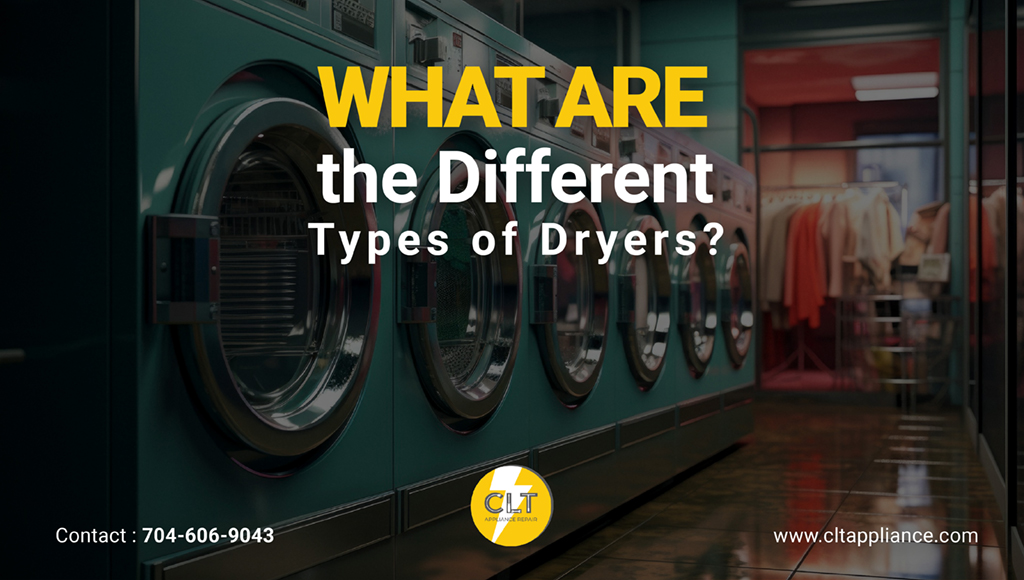
Buying a dryer sounds simple until you start looking at the options. Vented, condenser, heat pump, gas, combo units, and a handful of specialty options all do the same basic job, but how they do it changes everything about energy costs, installation, space, and how long your clothes last. Picking the wrong type means higher bills, a laundry room that overheats, or a machine that does not fit where you need it. The right type depends on your home setup, your budget, and how much laundry you actually run. Here is a clear breakdown of each one.
1. Vented Dryers
Vented dryers are the most common type in American homes. They pull in room air, heat it with an electric element or gas burner, blow it through the tumbling drum, and push the hot, moist air out through a vent hose that exits the house.
Why people choose them: They are affordable, widely available, and dry clothes fast. A standard vented dryer can finish a full load in 40 to 60 minutes.
The trade-offs: They require an external vent, which limits where you can install them. The vent needs regular cleaning to prevent lint buildup and fire risk. They also use more energy than newer technologies since all that heated air gets blown outside and wasted.
Best for: Homes with existing vent hookups, laundry rooms with exterior wall access, and buyers who want low upfront cost.
2. Condenser Dryers
Condenser dryers work without an external vent. Instead of pushing moist air outside, they cool it inside the machine until the moisture condenses into water. That water collects in a removable tank you empty after each load, or it drains through a hose into a nearby sink or drain pipe.
Why people choose them: flexible placement since they can go in closets, kitchens, bathrooms, or anywhere with a power outlet and no vent access.
The trade-offs:
- Higher energy use than heat pump models since the condensing process generates extra heat
- Room temperature increases during use because the heat stays inside instead of venting out
- Slightly longer cycle times compared to vented dryers
Best for: apartments, condos, and homes without existing vent hookups.
3. Heat Pump Dryers
Heat pump dryers are the most energy-efficient option available. They work like condenser dryers but add a heat pump that recycles warm air in a closed loop instead of generating new heat for every cycle. The pump extracts moisture from the air, reheats it, and sends it back through the drum.
Why people choose them: they use up to 50% less energy than conventional dryers. They run at lower temperatures, which is gentler on fabrics and reduces shrinkage and wear.
The trade-offs: higher purchase price (typically $200 to $500 more than a comparable vented model) and longer cycle times. A load that takes 45 minutes in a vented dryer may take 70 to 90 minutes in a heat pump model.
Best for: energy-conscious households, homes without venting, and anyone drying delicate fabrics regularly. The energy savings often pay back the higher purchase price within 2 to 4 years.
4. Gas Dryers
Gas dryers use a natural gas or propane burner to generate heat instead of an electric element. The drum motor and controls still run on electricity, but the heat source is gas.
Why People Choose Them
Gas heats faster and costs less per load in most US markets where natural gas is cheaper than electricity. A gas dryer can cut drying costs by 30 to 50% compared to a standard electric vented model.
The Trade-offs
They require a gas line in the laundry room, which not every home has. Installation must be done by a qualified professional to ensure safe connections and proper venting. The upfront cost is typically $50 to $150 higher than an equivalent electric model.
Best for: homes with existing gas hookups, large households running multiple loads daily, and areas where natural gas prices are significantly lower than electricity rates.
5. Washer Dryer Combos
Combo units combine a washing machine and a dryer in a single appliance. Most are ventless and use condenser or heat pump technology for the drying cycle.
Why people choose them: maximum space savings. One machine handles both jobs, which is ideal for tight laundry closets, studio apartments, and RVs.
The trade-offs: drying capacity is usually smaller than the wash capacity, so a full wash load may need to be split for drying. Complete wash and dry cycles can run 3 to 5 hours total. Repair complexity is higher since both functions share internal components.
Best for: small living spaces where a separate washer and dryer physically cannot fit.
Specialty and Alternative Options
A few niche dryer types serve specific needs that standard tumble dryers do not cover well:
- Spin dryers use high-speed spinning to extract water mechanically without heat. They do not fully dry clothes, but cut drying time significantly when used before a conventional dryer or line drying.
- Drying cabinets hang clothes on racks inside an enclosed cabinet and circulate warm air around them. They are gentle on delicates, woolens, and items that should not tumble.
- Compact or portable dryers are smaller, lighter units designed for countertops, small closets, or temporary setups. Most are ventless and run on standard 120V outlets.
These options work well as supplements to a primary dryer or as standalone solutions for small loads and specialty fabrics.
Choosing the Right Type for Your Home
The best dryer type depends on four practical factors:
- Venting Access: If you have an exterior wall vent, vented and gas dryers are options. If you do not, go ventless (condenser, heat pump, or combo)
- Fuel Hookup: Gas dryers need a gas line. Electric models only need the right outlet (240V for full-size, 120V for compact)
- Space: Measure the laundry area carefully. Stackable, compact, and combo units work in tight spots. Full-size vented and gas dryers need more room plus clearance for venting.
- Budget vs. Long-Term Cost: Vented dryers cost less upfront. Heat pump dryers cost more but save significantly on energy bills over their lifespan.
Energy Efficiency and Running Costs
Energy use varies significantly across dryer types. Here is how they compare on a per-load basis for a typical household running 5 loads per week:
- Heat pump dryers use roughly 1.0 to 1.5 kWh per load
- Vented electric dryers use roughly 2.5 to 4.0 kWh per load
- Condenser dryers use roughly 2.0 to 3.5 kWh per load
- Gas dryers use less electricity but consume natural gas, with total energy costs falling between heat pump and vented electric in most markets.
Over a 10-year lifespan, a heat pump dryer can save $400 to $800 in energy costs compared to a standard vented model. The exact savings depend on local electricity and gas rates.
Installation, Space, and Maintenance
Each dryer type has different installation and upkeep requirements.
- Vented and gas dryers need proper vent routing and clearance behind the unit. Gas dryers also need a certified installer for the gas connection.
- Condenser and heat pump dryers need a drain option or a tank that gets emptied regularly, but no exterior venting.
- Combo units often stack on top of or connect to the washer and need access to both water and drainage.
For maintenance across all types, clean the lint filter after every load. Vacuum the vent duct on vented models at least once a year. Clean the condenser unit on condenser and heat pump models every few months to maintain airflow and efficiency. Check door seals periodically for wear.
FAQs
Which type of dryer is most energy efficient?
Heat pump dryers are the most energy-efficient option because they recycle hot air in a closed loop and typically use significantly less electricity per load than vented or condenser models.
What type of dryer is best for small apartments?
Ventless options like condenser or heat pump dryers, and sometimes washer dryer combos or drying cabinets, are best because they do not require an external vent and save space.
What is the difference between vented and condenser dryers?
A vented dryer expels hot, moist air outside through a vent, whereas a condenser dryer collects moisture as water in a tank or drains it away, so it can be installed without an external vent.
Takeaway
Each dryer type solves a different problem. Vented dryers are affordable and fast. Heat pump dryers save energy. Gas dryers cut running costs. Condenser and combo units go where venting is not possible. Knowing what your home can support and what matters most to you makes the decision straightforward.
Whatever dryer you end up with, keeping it maintained is what makes it last. We service every type of dryer at CLT Appliance Repair and know the quirks of each one. When something goes wrong or you want a professional opinion before buying, we are a phone call away in Charlotte.
Author

- John Bennett is a seasoned appliance repair specialist at CLT Appliance Repair, where he brings over a decade of technical expertise and a strong commitment to customer satisfaction. With a background in electrical and mechanical systems, John has built a reputation for reliable, efficient, and honest repair services across a wide range of household appliances-including refrigerators, washing machines, ovens, and more.