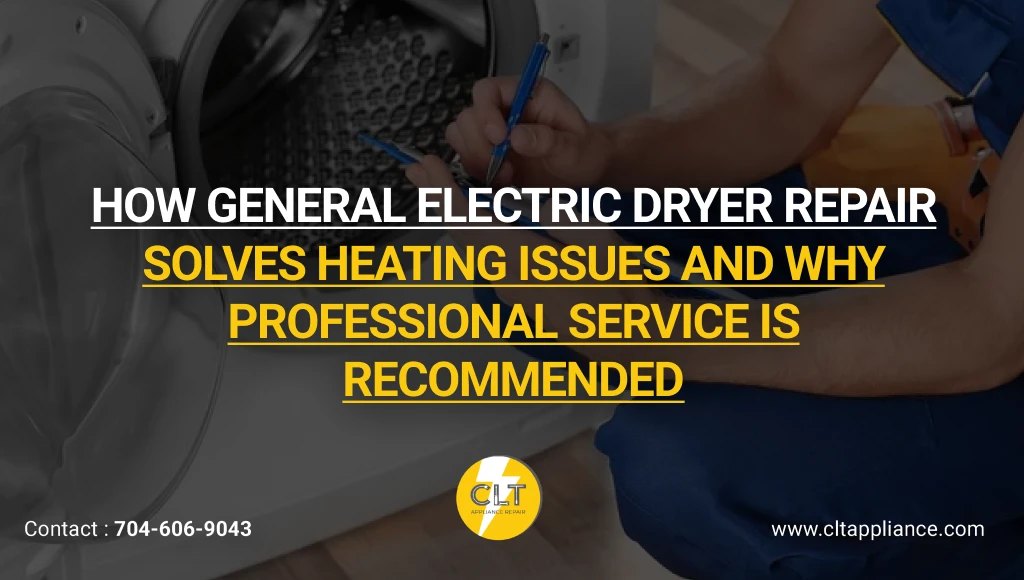
A GE dryer that runs but produces no heat is one of the most common appliance complaints in American households. Clothes come out damp. Cycle times become longer, and the dryer may run multiple cycles to finish a load, increasing energy use. Most homeowners assume the dryer is dying, but the real cause is usually a single failed component. Professional general electric dryer repair usually resolves heating problems in a single visit and costs far less than replacing the appliance.
The challenge is that diagnosing the right part requires electrical testing, which can be unsafe without proper training and tools.
How GE Dryer Repair Fixes A Dryer That Is Not Heating
Professional repair solves heating issues through a structured diagnostic process that tests every component in the heating circuit before any parts are replaced. Technicians typically start by checking the most common causes. Our Appliance Repair experts provide professional GE dryer service with trained technicians and fully stocked repair vehicles.
Clogged Vents and Thermal Fuse Failure
Restricted airflow from lint buildup is the most frequent trigger. When the dryer overheats, the thermal fuse blows permanently and cuts power to the heating system. A technician solves this by:
- Clearing the vent blockage and testing exhaust airflow
- Testing the thermal fuse for continuity with a multimeter
- Replacing the fuse with an OEM-rated part
- Identifying why the fuse blew to prevent repeat failure
Heating Element and Wiring Repairs
In electric GE dryers, a coil-style heating element generates the heat used to warm the drum. When the coil breaks or shorts out, the dryer will run but produce no heat. Technicians disassemble the rear panel and check for:
- Broken or shorted element coils requiring full replacement
- GE-specific purple connector wire charring that cuts power to the element
- Damaged surrounding wiring that would cause a new element to fail again
Thermostat and Gas Ignition Repairs
GE dryers use a cycling thermostat and a high limit thermostat working together. Either one failing produces inconsistent or absent heat. Technicians test both with a multimeter and replace whichever has lost continuity.
For gas models, general electric dryer repair includes:
- Igniter glow test to confirm proper heating
- Flame sensor cleaning to ensure consistent detection
- Solenoid coil testing to verify safe, sustained ignition
Electrical and Wiring Corrections
Electric GE dryers require a full 240-volt supply split across two breakers. Voltage imbalance or a tripped breaker causes the dryer to tumble with weak or no heat. Some GE dryers develop wiring damage or loose connectors near the heating element due to heat exposure over time. Technicians address both by:
- Testing voltage at the outlet and breaker panel
- Inspecting internal wiring for charred or broken connections
- Replacing degraded connectors to restore full power to the heating circuit
Why DIY Dryer Repair Carries Real Risk
Online tutorials make GE dryer repair look straightforward. In practice, working inside a dryer involves 240-volt electrical connections (in electric models) and gas line exposure (in gas models). The risks are not theoretical.
Electrical Shock and Fire
Touching live wires, reconnecting components incorrectly, or using the wrong replacement part can cause electrical shock, short circuits, or house fires. Dryers are frequently involved in residential fire incidents, most often due to lint buildup or restricted airflow.
Misdiagnosis
Without a multimeter and experience reading wiring diagrams, homeowners frequently replace the wrong part. A new heating element won’t fix a blown thermal fuse. A new thermostat won’t fix a clogged vent. Each wrong guess costs money and delays the actual repair.
Warranty and Insurance Issues
Self-performed repairs on newer GE dryers can void the manufacturer’s warranty. In addition, some homeowner insurance policies do not cover damage caused by unlicensed appliance work.
Simple maintenance, like cleaning the lint filter and checking the external vent for blockages, is safe and recommended. Anything beyond that benefits from professional hands.
Why Is Professional Service Recommended?
Professional service is recommended because DIY dryer repair carries risks most homeowners underestimate. Electric GE dryers run on 240-volt circuits, and gas models involve live gas lines, making improper work a shock, burn, or fire hazard. Beyond safety:
- Diagnostic accuracy: Many no-heat service calls involve more than one contributing issue, such as restricted airflow combined with a blown fuse.
- Warranty protection: Self-repairs void GE manufacturer warranties. OEM parts from a certified tech carry their own coverage.
- Cost efficiency: Total repair runs $150 to $300. DIY misdiagnosis often costs more due to wrong parts and eventual professional correction.
- First visit resolution: Stocked trucks and proper testing mean most jobs finish in one appointment
How Professional General Electric Dryer Repair Works
CLT Appliance Repair follows a systematic process that eliminates guesswork and ensures the repair holds.
The visit starts with a full inspection. The technician checks airflow, tests electrical continuity on key components using a multimeter, and examines the drum, belt, and exhaust path. This diagnostic phase typically takes 20 to 30 minutes.
Once the failed part is confirmed, the repair moves forward:
- OEM or manufacturer-approved replacement parts are installed
- All electrical connections are tested for correct voltage and continuity
- The dryer is run through a full heated cycle to verify performance
- The technician checks vent airflow and provides maintenance recommendations
Most GE dryer heating repairs take about 60 to 90 minutes once the problem is diagnosed. Reputable technicians quote the total cost before starting work and guarantee both parts and labor.
Why Experienced Technicians Save You Money Long Term
Professional repair costs more upfront than a DIY attempt, but it typically saves money over time. Correct diagnosis on the first visit means you buy only the part that actually failed. Proper installation prevents secondary damage that turns a $60 fix into a $400 problem. Maintained warranty coverage protects you if a larger issue surfaces later.
Experienced technicians also catch early warning signs during the visit. A vent that is 80% blocked, a belt showing wear, or a thermostat cycling inconsistently are all issues that a trained eye spots before they cause a breakdown.
Why does my GE dryer run but not heat?
The most common causes are a blown thermal fuse, a failed heating element, or restricted vent airflow. Check your breaker and lint filter first, then call a technician if the heat doesn’t return.
How much does a general electric dryer repair cost for heating issues?
Most heating repairs cost $150 to $300, including parts and labor. That is significantly less than replacing the dryer, which typically starts at over $500 for comparable GE models.
Do electric or gas GE dryers fail more often?
Electric models are more prone to element burnout. Gas models require periodic ignition system checks. Both benefit from quarterly vent cleaning to prevent the most common trigger for heating failure.
Takeaway
A GE dryer that stops heating is almost always fixable. The cause is typically a thermal fuse, heating element, thermostat, or vent blockage. The part itself is affordable. The value of professional appliance repair is in accurate diagnosis, safe installation, and the confidence that the fix will last.
CLT Appliance Repair has built its reputation on fast, honest GE dryer service. Our certified technicians arrive with stocked trucks, diagnose the issue in under 30 minutes, and complete most heating repairs the same day. Every job comes with upfront pricing before work begins and a parts and labor warranty after it is done. For homeowners who want their dryer working right without the risk of a DIY misfire, CLT is the call that gets it handled.
Book Your GE Dryer Repair With CLT Appliance Repair.
Author

- John Bennett is a seasoned appliance repair specialist at CLT Appliance Repair, where he brings over a decade of technical expertise and a strong commitment to customer satisfaction. With a background in electrical and mechanical systems, John has built a reputation for reliable, efficient, and honest repair services across a wide range of household appliances-including refrigerators, washing machines, ovens, and more.