Your refrigerator runs perfectly, but the ice maker has stopped working. The freezer stays cold, food stays fresh, yet the ice bin remains empty day after day. Before researching new refrigerators at $1,500 or more, consider this important fact. The ice maker is a separate component that rarely requires replacing the entire appliance.
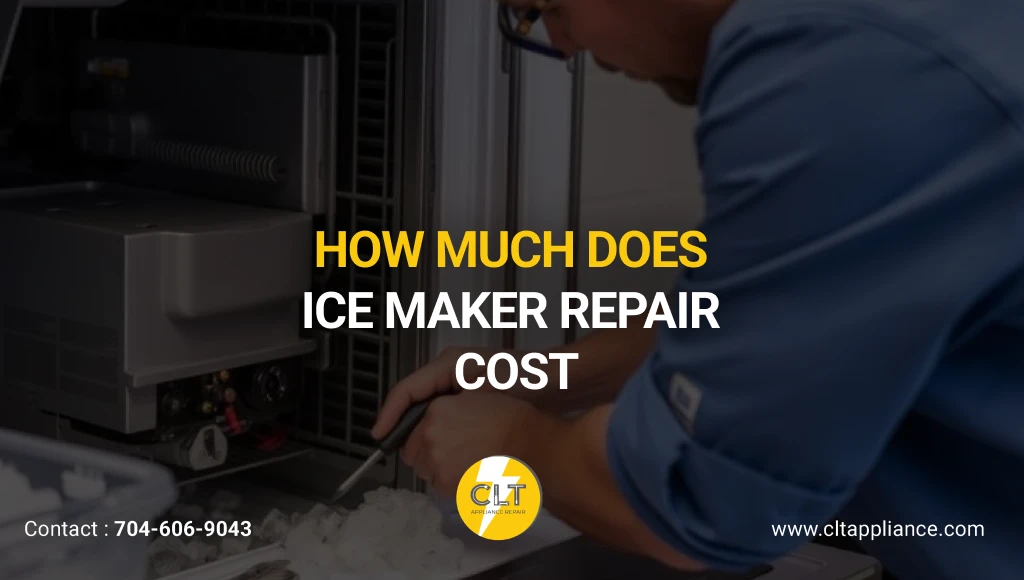
Most ice maker problems stem from simple causes like clogged water lines, faulty valves, or mineral buildup. These issues typically cost $100 to $250 to fix. Even complex repairs like motor replacement rarely exceed $400. Knowing the actual ice maker repair cost before making rushed decisions helps you save money and choose wisely.
Ice maker repairs average $260, with most homeowners paying between $200 and $300, including labor. Compare that to $250 to $600 for a new ice maker unit plus installation, and repair almost always wins financially.
Quick Cost Reference
| Problem | DIY Cost | Professional Cost |
| Clogged water line | $0 to $20 | $75 to $150 |
| Filter replacement | $15 to $30 | $75 to $150 |
| Water inlet valve | $25 to $50 (part) | $100 to $175 |
| Thermostat | $30 to $60 (part) | $150 to $250 |
| Motor | $80 to $150 (part) | $200 to $400 |
| Control board | $100 to $200 (part) | $200 to $350 |
Try These Fixes Before Calling A Technician
Many ice maker problems have simple solutions that cost nothing. Before scheduling a service call, run through this checklist to potentially save yourself $100 or more.
Check the Basics First
Start with the obvious culprits that homeowners often overlook.
Confirm the ice maker is turned on.
Look for a switch, lever, or pause button. Some models have a control arm that must be in the down position to produce ice. A raised arm or active pause function stops all ice production.
Verify the water supply connection.
Locate the shut-off valve behind or beneath the refrigerator. Turn it fully counterclockwise to ensure water flows to the ice maker. A partially closed valve causes slow production or a complete stoppage.
Test the freezer temperature.
Ice makers require temperatures below 10°F to function properly. Warm freezer settings halt ice production entirely. Check the thermostat and adjust as needed, then wait 24 hours for temperatures to stabilize.
Clear Common Blockages
Frozen or clogged components cause most ice maker failures.
Thaw frozen fill tubes.
The water fill tube can freeze solid, preventing water from reaching the ice mold. Unplug the refrigerator and use a hair dryer on low heat to gently thaw the tube. Never use high heat on plastic components.
Replace clogged filters.
Water filters should be changed every six months. A clogged filter restricts water flow and produces small, misshapen, or hollow ice cubes. Replacement filters cost $15 to $30, depending on your refrigerator brand.
Remove ice jams.
Sometimes ice cubes clump together and block the ejector mechanism. Remove the ice bin, break apart any clumped ice, and clear debris from the chute.
Pro Tip:
Pour a small amount of water directly into the ice mold and wait to see whether it freezes. Successful freezing indicates the problem lies with your water supply rather than the ice maker itself. This simple test helps determine whether you need a plumber or an appliance technician.
Water System Repairs
Problems with water delivery account for most ice maker service calls. These components control how water enters the ice maker and reaches the mold.
Water Inlet Valve
Cost: $100 to $175
This valve opens to allow water into the ice maker and closes once the mold fills. Failure results in no water flow, constant dripping, or puddles on the floor. Electrical issues can also prevent the valve from receiving the signal to open. The part costs $25 to $50, with labor making up the remainder.
Signs of inlet valve failure:
- The ice maker receives no water despite an open supply valve
- Water continuously drips into the mold
- Leaking underneath or behind the refrigerator
- Humming sound, but no water delivery
Ice Quality and Cleaning Service
Cost: $75 to $250
Bad-tasting, strange-smelling, or cloudy ice often requires professional cleaning. Technicians sanitize the entire water system and check for mold or bacterial growth affecting ice quality. This service includes filter replacement, line flushing, and component inspection.
Water Line Repair
Cost: $100 to $200
Cracked, kinked, or corroded water lines cause leaks and restrict water flow. Problems involving your home’s plumbing rather than the appliance connection may require a plumber instead of an appliance technician.
CLT Appliance Repair technicians diagnose water problems during the first visit and determine whether the issue originates from the ice maker or your home plumbing. This accurate diagnosis prevents wasted money on the wrong service call.
Solenoid Valve
Cost: $100 to $175
The solenoid is an electrical component controlling water flow into the ice-making chamber. Worn coils or damaged connections prevent proper water delivery even when the inlet valve works correctly.
Temperature and Control Repairs
Ice makers depend on precise temperature management and electronic controls to function properly. These repairs typically fall in the mid-range cost category.
Thermostat Replacement
Cost: $150 to $250
The thermostat monitors freezer temperature and signals the ice maker when conditions support ice production. Thermostat and temperature-related repairs represent common mid-range service calls.
Symptoms of thermostat failure:
- The ice maker runs constantly without producing ice
- Ice melts before ejecting from the mold
- Inconsistent production from one cycle to the next
- Freezer temperature is fluctuating unexpectedly
Defrost System Repair
Cost: $150 to $300
Frosted evaporator coils indicate the refrigerator’s defrost cycle has failed. This affects ice production because the freezer cannot maintain proper temperatures. Defrost system repairs involve the heater, timer, or control board.
Control Board Replacement
Cost: $200 to $350
The control board coordinates all ice maker functions, including cycle timing, water fill duration, and ejector operation. Error codes on the display, unresponsive buttons, and cycles that stop all point to control board problems. Premium brands often have more expensive boards requiring OEM parts.
Motor and Mechanical Repairs
These repairs involve the most expensive components and require the most labor. Carefully evaluate whether repair or replacement makes better financial sense.
Ice Maker Motor
Cost: $200 to $400
The motor powers the ejector mechanism that pushes finished ice cubes out of the mold and into the bin. Motor replacement ranks among the most expensive ice maker repairs. When the motor fails, ice forms but never releases from the mold.
Recognizing Motor Failure
- Ice cubes form but remain stuck in the mold
- Grinding or humming sounds during the harvest cycle
- A burning smell coming from the ice maker area
- Motor runs, but the ejector arm stays motionless
At this price point, consider the age of your refrigerator and ice maker before proceeding. CLT Appliance Repair technicians provide honest assessments about whether motor replacement makes financial sense for your specific situation, recommending replacement when that option serves you better.
Drive Blade and Dispenser Assembly
Cost: $150 to $400
The drive blade pushes ice from the storage bin through the dispenser chute. A dull blade or burned-out dispenser motor prevents ice from reaching your glass even when production works normally. Refrigerator-freezer units may have two motors: the ice-dispenser motor and the master control-module motor.
Costs by Ice Maker Type
Where your ice maker lives significantly affects repair expenses.
Refrigerator and Freezer Units
Typical repair cost: $90 to $250
Built-in refrigerator ice makers are the most common type and generally the least expensive to repair. Technicians can access most components without removing the unit. Parts remain widely available for popular brands like Whirlpool, GE, Samsung, and LG.
Replacing the entire ice maker assembly costs $250 to $600, depending on brand. Samsung units run $320 to $580, while Whirlpool models cost $275 to $500.
Portable Countertop Units
Typical repair cost: $75 to $200
These compact ice makers have the simplest designs, but often make replacement more practical than repair. New portable units cost $100 to $300, so repair costs exceeding $100 rarely make financial sense. Consider replacement for anything beyond filter cleaning or minor adjustments.
Freestanding and Built-In Undercounter Units
Typical repair cost: $100 to $350
Undercounter ice makers cost more because of the difficult access. Technicians must often disconnect plumbing and pull the unit from the cabinetry. These units also have larger, more complex components than refrigerator models.
Service Fees and Labor Costs
Understanding fee structures helps you budget accurately and avoid billing surprises.
Diagnostic Fees
Most companies charge a fee to identify the problem before quoting repair costs.
- Standard diagnostic: $75 to $125
- After-hours or emergency: Add 25% to 50%
- Weekend appointments: $100 to $175
- Travel fee for distant locations: $25 to $75 additional
Many companies credit the diagnostic fee toward your repair bill when you proceed with the work. Always confirm this policy when scheduling.
Hourly Labor Rates
Appliance technicians typically charge $70 to $125 per hour. Most ice maker repairs take one to two hours. Complex jobs involving built-in units or multiple component failures may require three hours or more.
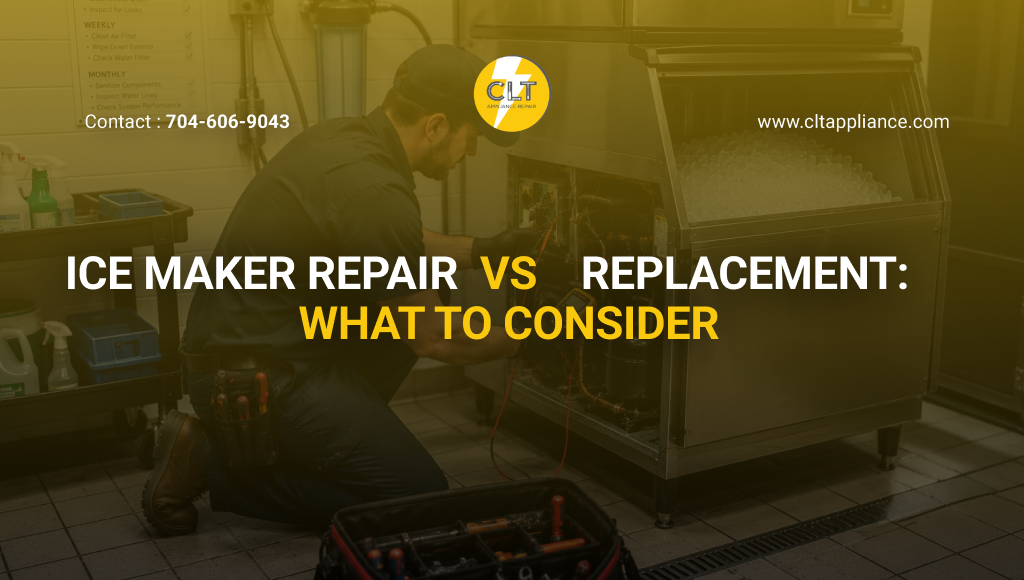
Repair or Replace: Making the Smart Choice
According to HomeGuide, ice maker repair averages $100 to $225, while replacement costs $250 to $600 for refrigerator units. Several factors determine the right choice.
Choose Repair When:
- Your refrigerator is less than 8 years old
- Only one component has failed
- Repair costs stay under $200
- The refrigerator otherwise works perfectly
A $200 valve repair extends the life of a $1,500 appliance for years. Single-component failures typically indicate normal wear rather than systemic problems.
Choose Replacement When:
- Multiple components have failed simultaneously
- The refrigerator is more than 10 years old
- Repair costs approach $300 or more
- The ice maker has needed multiple repairs recently
New countertop ice makers cost $100 to $300. Any repair exceeding $75 makes replacement smarter for portable units.
FAQs
How frequently should ice makers be cleaned?
Clean the ice bin monthly and the entire ice maker every three to six months. Regular cleaning prevents mold, bacteria, and mineral buildup that affect ice quality and damage components over time.
Which ice maker brands are most reliable?
Whirlpool, GE, and LG consistently rate well for reliability and parts availability. Premium brands like Sub-Zero offer excellent quality but cost more to repair due to specialized parts and technician requirements.
Final Thoughts
Understanding ice maker repair costs prevents panic when your unit stops producing ice. Most problems cost $100 to $300 to fix, well below replacing your refrigerator or even the ice maker assembly. Getting the right technician for the specific problem saves money and restores ice production faster.
CLT Appliance Repair handles ice maker problems for all major refrigerator brands, including Whirlpool, GE, Samsung, LG, KitchenAid, Sub-Zero, and Viking. Our EPA-certified technicians arrive with common replacement parts already stocked, completing most appliance repairs the same day. Every repair includes a 90-day warranty, and we offer evening and weekend appointments when your schedule requires flexibility.
Author

- John Bennett is a seasoned appliance repair specialist at CLT Appliance Repair, where he brings over a decade of technical expertise and a strong commitment to customer satisfaction. With a background in electrical and mechanical systems, John has built a reputation for reliable, efficient, and honest repair services across a wide range of household appliances-including refrigerators, washing machines, ovens, and more.