
DIY Tips for Repairing Common Range Hood Issues
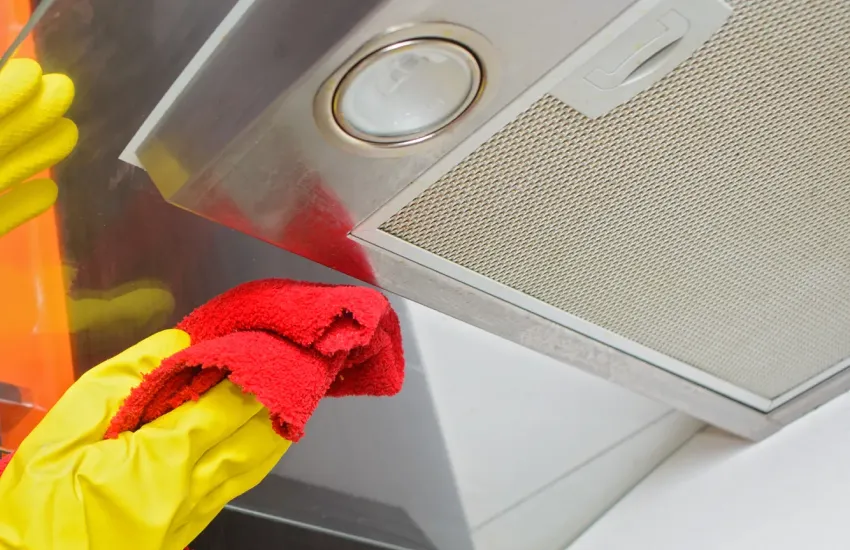
Range hoods are one of those appliances you forget about until they stop working. Then the kitchen fills with smoke, grease coats the cabinets, and every meal leaves a smell that lingers for hours. The good news is that most range hood problems are caused by dirty filters, loose parts, or burned-out bulbs, all things you can fix yourself in under an hour. The trickier stuff, like motor failures and control board faults, may need a professional, but knowing how to handle the basics saves money and keeps your kitchen ventilation running the way it should.
Your fridge is a kitchen superstar as it keeps all your food fresh and drinks cold.
But does the fridge feel warm when you open it?
Is there water all over the floor?
Fridge issues are the worst!
Things To Do Before You Start
Range hoods combine a motor, fan, grease filters, lighting, controls, and ductwork in a compact housing mounted over your stove. Before touching any of it, safety comes first.
Switch off the circuit breaker that feeds the hood. Unplug the unit if the cord is accessible. Confirm there is no power by flipping the switches. Gather these basics before opening anything up:
- Phillips and flathead screwdrivers
- A multimeter for testing switches and connections
- Degreaser and warm soapy water for cleaning filters and fan parts
- Replacement bulbs matched to the hood’s bulb type
- New filters if yours are past their lifespan
Weak Suction or No Airflow
The hood runs but isn’t pulling smoke or steam. In most cases, the cause is a blocked filter or a duct obstruction.
Check the Filters First
Pull out the metal mesh grease filters and hold them up to a light. If you can’t see through them, they’re clogged.
Soak in hot soapy water or degreaser for 15 minutes, scrub, rinse, and dry fully before reinstalling. Charcoal filters (found in recirculating hoods) can’t be cleaned and need replacing every 3 to 6 months.
Inspect the Ductwork
Go outside and check where the duct exits the building. Clear any:
- Bird nests, leaves, or lint blocking the opening
- Stuck flappers or louvers that aren’t opening when the fan runs
Back inside, look along the duct run for kinks, sags, or disconnected sections restricting airflow.
Check the Motor Last
If filters are clean and the duct is clear but suction is still weak, the motor may be failing. Watch for these signs:
- Humming with little airflow
- Slow startup
- Motor that runs hot to the touch
Any of these points to a failing motor or capacitor. Testing and replacing these parts involves working with electrical components inside the housing, so proceed carefully or call a professional
CLT Appliance Repair handles range hood motor and capacitor replacements for homeowners across Charlotte. If the filters and duct checked out fine, but the fan still barely pulls, our technicians can test the motor on site and tell you whether a repair or a new hood makes more sense.
Noisy, Rattling, or Vibrating Hood
Range hood noise is almost always mechanical. Before assuming the motor is gone, work through the simpler causes first. Most rattles and vibrations are solved without buying a single part.
Check for Loose Parts
Open the hood and inspect every fastener you can find. Tighten screws on the:
- Housing panels
- Fan shroud
- Mounting brackets
Do this firmly and systematically. A single loose screw on a metal panel can produce a surprisingly loud rattle at full fan speed.
Lights Not Working
Range hood lights burn out regularly because of the heat and grease exposure they endure. Start with the simplest fix first.
Identify the bulb type your hood uses (halogen, LED, or appliance bulb) and replace it with an exact match. If the new bulb does not light up, remove it and check the socket for burnt or corroded contacts. A cotton swab with rubbing alcohol cleans light corrosion. If the socket looks damaged or melted, it needs to be replaced.
Test the light switch with a multimeter the same way you would test the fan switch. No continuity in the “on” position means the switch has failed. Light switches on range hoods are inexpensive and straightforward to swap with a screwdriver and 15 minutes.
Buttons or Touch Panel Not Responding
A non-responsive control panel feels like a serious fault, but the cause is usually something much simpler, sitting right on the surface.
Clean the Panel
Cooking residue builds up into a thin film over the touch sensors and blocks them from reading your fingers. It’s invisible enough to miss but effective enough to make the whole panel seem dead. Wipe the surface down with:
- A damp cloth to lift the residue
- A mild degreaser for stubborn buildup
- A dry cloth to finish the panel must be completely dry before testing
If responsiveness comes back after cleaning, you’re done.
When to Stop and Call Us
Some range hood problems cross the line from DIY to dangerous. Stop working and call CLT Appliance Repair if you encounter any of these:
- Burning smell or melted insulation around wiring or the motor
- The breaker trips every time the hood is turned on
- Visible arcing or sparking inside the wiring compartment
- Motor replacement that requires disassembling the entire housing
- Control board faults that persist after cleaning and resetting
If the repair estimate approaches 50% of the price of a new range hood, replacement is usually the smarter financial move, especially on units older than 8 to 10 years.
Maintenance That Prevents Future Problems
Most range hood failures trace back to grease buildup and neglected filters. A simple monthly routine keeps everything running quietly and efficiently:
- Clean metal grease filters once a month in hot, soapy water
- Replace charcoal filters every 3 to 6 months on recirculating hoods
- Wipe the fan blades and interior quarterly to prevent grease from building up on moving parts
- Test suction strength monthly by holding a paper towel near the filter with the fan on high
- Check the exterior vent seasonally for blockages or a stuck flapper
Takeaway
Most range hood problems come down to dirty filters, loose screws, burned-out bulbs, or greasy controls. Fixing those basics yourself takes minimal tools and saves a service call. When the motor, wiring, or control board is involved, professional help prevents a small issue from becoming a safety hazard.
We work on range hoods regularly at CLT Appliance Repair. If your hood has stopped pulling smoke or started making sounds it should not be making, we are a call away in Charlotte.
FAQs
It may not be getting power. Check the outlet, GFCI, and breaker first, then inspect fuses and wiring before considering a professional repair.
Tighten loose screws and panels, clean grease from the fan, and secure or replace any loose or damaged fan blades.
Clean or replace clogged filters, check for blockages in the duct and exterior vent, and verify that the fan and motor are running at the correct speed.
Don't let a malfunctioning Range Hood disrupt your daily life. Contact CLT Appliance Repair today at 704-606-9043 to schedule your Range Hood repair service.
We'll have your Range Hood back to optimal performance in no time!.