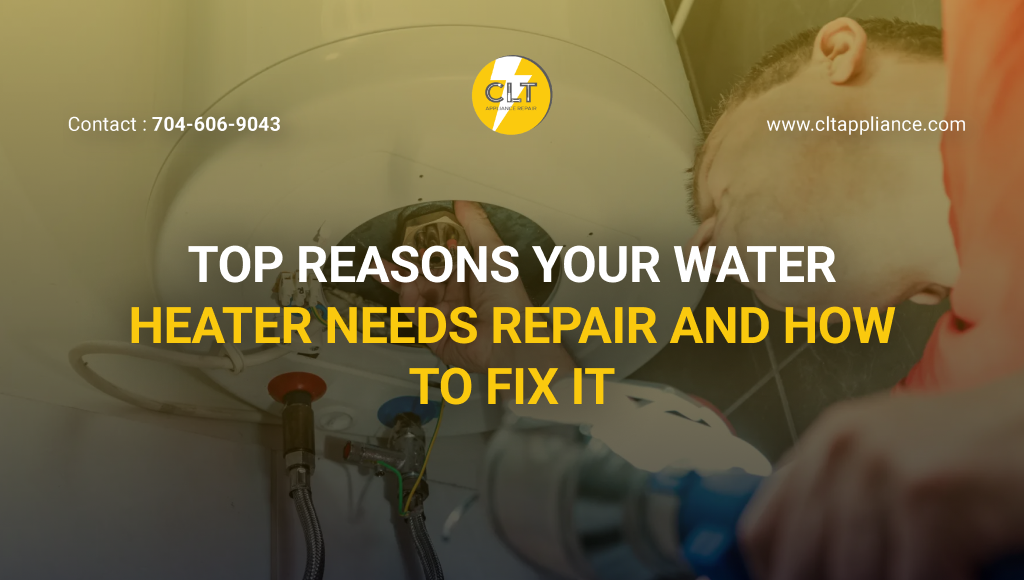
Hot water is one of those everyday comforts you rarely think about until it disappears. The moment your shower runs cold, or your tank starts leaking, your water heater suddenly becomes the most important appliance in the house. Before you assume the worst, it helps to know that most water heater problems come from a few common causes, and many of them have practical fixes.
These issues are also worth catching early. The U.S. Department of Energy reports that water heating makes up about 18% of a home’s energy use, the second largest energy expense in most homes. Spotting the reasons your water heater needs repair and knowing how to fix each one helps you act before a small problem turns into an expensive emergency.
Warning Signs Your Water Heater Needs Repair
Before a water heater fails, it usually gives off warning signs. Catching them early can save you from cold showers, water damage, and costly emergency water heater repair.
Keep an eye out for the following symptoms:
- No hot water, or water that never gets hot enough
- Puddles or moisture around the base of the tank
- Rumbling, popping, or banging sounds during heating
- Rusty, cloudy, or foul-smelling water
- Weak hot water pressure at your taps
- A noticeable jump in your energy bills
If any of these sound familiar, the sections below explain what is likely causing the issue and how to fix it.
8 Reasons Your Water Heater Needs Repair and How to Fix Each
Most water heater issues fall into a handful of common categories. Below, we break down each one with its likely cause and the steps you can take to resolve it.
1. No Hot Water at All
A complete lack of hot water is the most obvious sign that something is wrong. For gas heaters, the usual culprit is a pilot light that has gone out. For electric models, it is often a tripped breaker, a failed heating element, or a faulty thermostat.
Here is how to troubleshoot it:
- For gas units, check whether the pilot light is lit and relight it following the manufacturer’s instructions
- For electric units, check your breaker panel and reset the breaker if it has tripped
- Confirm the thermostat is set to an appropriate temperature, usually around 120°F
- If power and gas are fine, the heating element or thermostat may need to be tested and replaced
If the unit still produces no hot water after these checks, it is time to bring in a professional.
2. Water Not Hot Enough or Inconsistent
Sometimes the water heats up but never quite reaches the temperature you want, or it swings between hot and cold. This usually points to a thermostat set too low or malfunctioning, sediment reducing the tank’s efficiency, or a heating element starting to fail. An undersized unit can also struggle to keep up with a busy household.
Try these steps to restore steady hot water:
- Set the thermostat to around 120°F and test the temperature again
- Flush the tank to clear out sediment that interferes with heating
- Have a technician test the heating elements if the temperature stays inconsistent
- Consider a larger unit if your household regularly outpaces the current capacity
Consistent temperature problems often signal a component nearing the end of its life, so professional testing is worthwhile.
3. Water Heater Is Leaking
A leaking water heater should never be ignored, because even a small drip can lead to serious water damage over time. Leaks often stem from loose connections, a faulty temperature-and-pressure relief valve, a worn drain valve, or corrosion inside the tank itself.
This issue matters more than most homeowners realize. Water damage and freezing are two of the most common sources of home insurance claims, with about 1 in 67 insured homes filing a water damage or freezing claim each year. A leaking water heater is a frequent cause, so acting quickly can prevent costly damage.
Depending on the source of the leak, here is what to do:
- Tighten loose connections or replace worn washers and valves
- Replace the temperature and pressure relief valve if it is the source
- Inspect and replace the drain valve if it is dripping
- If the tank itself is leaking, the unit almost always needs to be replaced
Because tank leaks point to internal failure, this is one problem where calling a professional quickly can prevent expensive damage.
4. Rumbling, Popping, or Banging Noises
Strange noises coming from your water heater are usually caused by sediment that has built up and hardened at the bottom of the tank. As the burner heats this layer, trapped water bubbles up and creates rumbling or popping sounds. Over time, the buildup forces the unit to work harder and wear out faster.
The fix is usually straightforward:
- Flush the tank to remove the accumulated sediment
- Descale the unit if you have hard water in your area
- Schedule annual flushing to keep the problem from returning
If the noises continue after a thorough flush, a technician should inspect the tank for more serious damage.
5. Rusty or Discolored Water
When hot water comes out rusty, brown, or cloudy, corrosion is usually to blame. The most common cause is a worn anode rod, the component designed to attract corrosion away from the steel tank. Once it deteriorates, the tank lining itself can begin to rust.
You can address discolored water with these steps:
- Replace the anode rod, which is an inexpensive and effective fix
- Flush the tank to clear out rust and loose sediment
- If discoloration continues, have the tank inspected for internal corrosion
A rusting tank that cannot be restored will eventually need replacement, so early action is important.
6. A Rotten Egg or Foul Smell
A sulfur or rotten egg odor in your hot water is unpleasant but usually harmless. It typically happens when bacteria in the tank react with a deteriorating anode rod. While it does not always signal a major failure, it should still be dealt with promptly.
Here is how to clear the smell:
- Flush and disinfect the tank to kill the bacteria causing the odor
- Replace the anode rod, especially if it is corroded
- Ask a professional about an anode rod designed to resist odor
If the smell returns quickly, a technician can identify whether bacteria or the water supply itself is the source.
7. Low Hot Water Pressure
If your hot water trickles out while cold water flows normally, the problem usually lies inside the water heater rather than your plumbing. Sediment and limescale buildup can clog the tank and supply lines, restricting flow over time. Older units are especially prone to this.
To improve hot water pressure, try the following:
- Flush the tank to remove sediment and mineral buildup
- Clean or replace clogged fixtures and aerators
- Install a water softener if hard water is the underlying cause
Persistent pressure issues across multiple taps are worth a professional diagnosis to rule out larger problems.
8. Rising Energy Bills
A steady climb in your energy bills, without any change in how much hot water you use, often points to a water heater that is losing efficiency. Sediment buildup, an aging unit, or small leaks can all force the system to work harder and consume more energy.
A few steps can help bring costs back down:
- Flush the tank regularly to maintain efficiency
- Insulate the tank and exposed hot water pipes to reduce heat loss
- Replace an aging unit with a more efficient model if repairs no longer help
If your bills stay high despite maintenance, an upgrade may save more money than continued repairs.
Water Heater Problems You Should Never Fix Yourself
Plenty of minor water heater issues are safe to troubleshoot at home, but some carry real safety risks. Knowing your limits protects both your home and your family.
Always call a licensed professional for the following:
- Any smell of gas or a suspected gas leak, which should be treated as an emergency
- Major tank leaks or flooding around the unit
- Electrical faults, exposed wiring, or repeated breaker trips
- Replacing a heating element, gas valve, or the entire tank
These repairs involve gas, high voltage, or pressurized water, and a small mistake can lead to injury or costly damage.
Tips to Prevent Future Water Heater Problems
The best way to avoid repairs is to maintain your water heater before problems start. A little routine care goes a long way toward extending its lifespan and keeping it efficient.
Build these simple habits into your home maintenance:
- Flush the tank once a year to remove sediment
- Check the anode rod every few years and replace it when worn
- Test the temperature and pressure relief valve annually
- Keep the thermostat set around 120°F for safety and efficiency
- Insulate the tank and hot water pipes to reduce strain on the system
Regular maintenance is far cheaper than an emergency repair or an early replacement.
Important FAQs
How long does a water heater usually last?
Most tank water heaters last eight to twelve years, while tankless models can last twenty or more. Maintenance, water quality, and usage all affect lifespan, so annual flushing and inspections help you get the most from your unit.
Why is my water heater leaking from the bottom?
A bottom leak often comes from a faulty drain valve, excess pressure released through the relief valve, or corrosion inside the tank. Loose valves can be repaired, but a corroded tank usually means the unit needs to be replaced.
Is it worth repairing an older water heater?
It depends on age and repair cost. If your heater is under ten years old and the fix is minor, repair is usually worthwhile. If it is older or costs more than half of a new unit, replacement is smarter.
Can I fix a water heater myself?
Many minor issues, like resetting a breaker, relighting a pilot light, or flushing the tank, are safe to handle yourself. Anything involving gas, electrical wiring, or a leaking tank should always be left to a licensed professional.
Bottom Line
Your water heater works hard every day, and most problems it develops come with clear warning signs and practical solutions. By recognizing the symptoms early, you can act before a small issue turns into an expensive one. When your water heater needs more than a simple fix, trusted local water heater repair is the fastest way to get your hot water flowing again.
When your water heater needs more than a quick fix, CLT Appliance Repair is ready to help. Our certified technicians provide fast, reliable water heater repair across Charlotte and the surrounding areas, with same-day service available seven days a week. We diagnose the problem accurately, complete most repairs on the first visit, and back our work with a six-month warranty.
Do not let a failing water heater leave you with cold showers and rising bills. Call us today at 704-606-9043 or book your service online and get $15 off your first repair!
Author

- John Bennett is a seasoned appliance repair specialist at CLT Appliance Repair, where he brings over a decade of technical expertise and a strong commitment to customer satisfaction. With a background in electrical and mechanical systems, John has built a reputation for reliable, efficient, and honest repair services across a wide range of household appliances-including refrigerators, washing machines, ovens, and more.