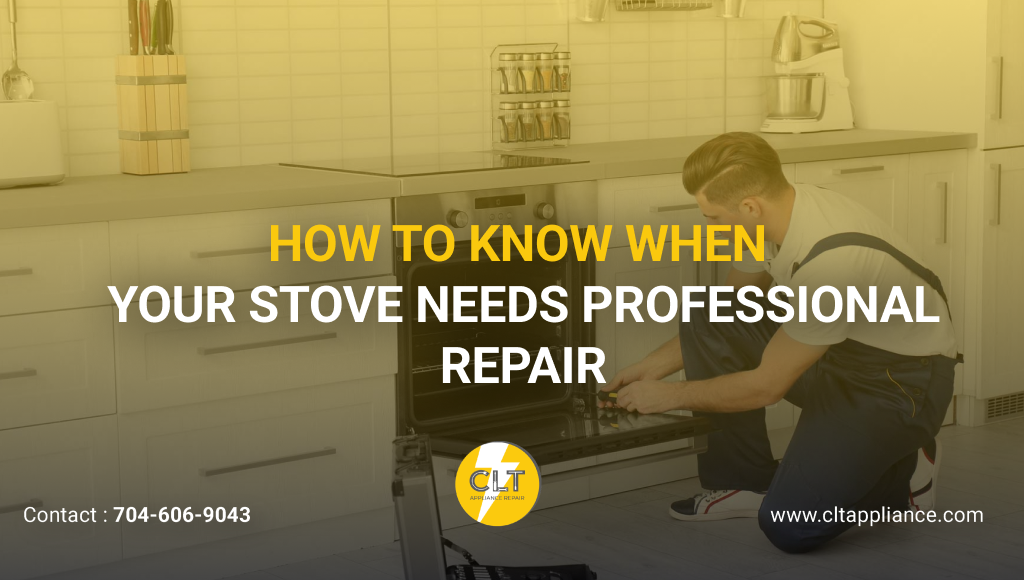
Your stove is one of the hardest-working appliances in your home, running through countless meals a year, so the occasional hiccup is completely normal. A burner that takes a second to catch or a knob that feels a little loose is rarely a reason to worry. Other problems, though, are clear signals that something has gone wrong inside the appliance and needs a trained technician rather than a quick fix at home.
Knowing the difference protects both your wallet and your safety. Cooking equipment is the leading cause of home fires in the United States, behind roughly 52% of reported home fires, which is exactly why a misbehaving stove is worth taking seriously.
Why You Should Not Ignore Stove Problems?
Ignoring a stove problem rarely makes it disappear, and it often turns a small repair into a dangerous or costly one. A fault that seems minor today can quietly grow into something far worse tomorrow.
Leaving stove trouble unaddressed can put you at risk of:
- Kitchen fire from faulty wiring or a stuck burner
- A gas leak that threatens your whole household
- Larger repair bill once the damage spreads to other parts
- Full replacement that a timely fix could have avoided
Ranges and cooktops alone are involved in around 61% of home cooking fires, so a stove that is not working correctly is more than an inconvenience. Catching trouble early keeps your kitchen safe and usually keeps the repair affordable.
6 Signs Your Stove Needs Professional Repair
Some stove issues are easy to brush off, but a few are clear warnings that a technician should take a look. Watch for the following signs.
1. Burners Won’t Light Or Heat Evenly
A burner that refuses to light, heats slowly, or warms unevenly usually points to a deeper electrical or gas fault rather than user error. It is one of the most common reasons people call for stove repair.
The usual causes include:
- Worn or dirty igniters on a gas stove
- A failing burner switch or an infinite switch on an electric stove
- A cracked or burned-out heating element
- A clogged burner port restricting the gas flow
A single weak gas flame may simply need cleaning, but several struggling burners point to a bigger problem. A professional can identify the exact cause and fix it safely.
2. You Smell Gas
A gas smell around your stove is never normal and should be treated as an emergency. A lingering or strong odor almost always means gas is escaping, which is a serious fire and health risk.
If you smell gas, act quickly and in this order:
- Do not light a flame, flip a switch, or use any electronics
- Open windows and doors to let the area air out
- Turn off the gas supply if you can reach it safely
- Leave the house, then call your gas company or 911
- Have a professional find and repair the source before using the stove again
A faint whiff as a burner first lights can be routine, but anything stronger or longer lasting deserves immediate attention.
3. Sparks, Shocks, Or A Tripped Breaker
Sparks, small electric shocks, or a breaker that trips whenever you use the stove all point to an electrical fault. These are among the most urgent stove problems because they can lead to fire.
Frayed wiring, a failing element, or a damaged control board can each be the culprit. Unplug an electric stove if you can do so safely, stop using it entirely, and arrange a professional inspection before you switch it back on.
4. The Oven Won’t Reach Or Hold Temperature
An oven that will not heat up, runs far too hot, or cannot hold a steady temperature usually has a failing element, igniter, or thermostat. The everyday result is undercooked or burnt food and a lot of wasted energy.
If your dishes come out wrong no matter how carefully you set the dial, the oven’s temperature sensor or heating component is the likely cause. A technician can test these parts and swap the faulty one quickly, restoring even and reliable baking.
5. Strange Noises Or Burning Smells
Buzzing, clicking that never stops, or a burning smell coming from the body of the stove are all signs of trouble inside the appliance. They often mean an electrical part is overheating or beginning to fail.
A gas igniter that keeps clicking long after the burner lights, or a scorched smell that is clearly not from your food, should never be ignored. Turn the stove off and have it inspected before you use it again.
6. Unresponsive Controls Or Display
Knobs that do nothing, buttons that stick, or a control panel that freezes or goes dark usually point to a wiring or control-board issue. A stove you cannot reliably turn on or off is a real safety hazard, not just an annoyance.
Today’s stoves depend on electronic controls that can wear out over the years. If yours stops responding the way it should, a professional can repair or replace the board so the appliance works predictably again.
If your stove is showing any of these signs in the Charlotte area, it is worth bringing in a professional sooner rather than later. Our certified technicians at CLT Appliance Repair offer same-day stove repair, with most issues fixed on the very first visit.
Stove Issues You Can Check Before Calling
Not every stove hiccup needs a service call. Before you pick up the phone, a few quick and completely safe checks can rule out the simplest causes.
- Check the power: Make sure an electric stove is plugged in and the outlet is live.
- Reset the breaker: Look in your breaker box for a tripped switch and reset it once
- Check the gas valve: Confirm the supply valve behind the stove is fully open.
- Clean the burners: Clear cooled burner heads and igniters of food debris or grease.
- Reset the controls: Cut the power for a full minute, then restore it
If none of these solves the problem, or if you ever notice a gas or electrical issue, stop right there. Repairs that involve gas lines, wiring, or internal components should always be left to a trained technician.
Should You Repair Or Replace Your Stove?
Whether to repair or replace usually comes down to three things, namely the stove’s age, the cost of the fix, and how often it has been breaking down. A simple guideline is the 50/50 rule, which says that if a repair would cost more than half the price of a new stove, replacement may make more sense.
Most stoves last around 13 to 15 years with regular use, so age is a useful starting point. These questions help you decide:
- Is the stove under 10 years old? A repair is usually the smart move.
- Is this the first real problem, or one of many? Repeat failures lean toward replacement.
- Is the repair cost reasonable compared to a new unit? Let the 50/50 rule guide you.
A professional diagnosis removes the guesswork, since a technician can tell you exactly what is wrong, what it will cost, and whether the appliance still has years of life left.
FAQs
How do I know if my stove is worth repairing?
A stove is usually worth repairing if it is under ten years old and the repair costs less than half the price of a new one. Frequent breakdowns or major faults on an older stove often point toward replacement instead.
Is it safe to use a stove with one broken burner?
If one electric burner is dead but the others work normally, the stove is usually safe to use with care. But any gas smell, sparking, or a burner that will not turn off means you should stop using it immediately.
Why is my electric stove not heating up?
An electric stove that will not heat usually has a faulty heating element, a bad surface switch, or a wiring fault. Sometimes a tripped breaker is to blame. If resetting the breaker does not help, a technician should inspect it.
What does it mean when my gas stove clicks but won’t light?
Constant clicking without a flame usually means the igniter or burner is dirty, wet, or misaligned. Cleaning a cooled burner head can help. If the clicking continues or you smell gas, turn it off and call a professional.
How long does a stove usually last?
Most stoves last around 13 to 15 years with regular use and basic care. Gas stoves often run slightly longer than electric models. Once a stove passes that age and starts failing often, replacement usually becomes the smarter choice.
Bottom Line
A stove that lights cleanly, heats evenly, and responds to every control is simply doing its job. The moment you notice any of the above-mentioned signs, those are your cues that a professional should take over. Pushing through these problems tends to make them worse, while acting early keeps your kitchen safe, protects the appliance, and usually keeps the repair quick and affordable. When in doubt, a quick call to a trusted technician is always cheaper than a major fix down the line.
At CLT Appliance Repair, we have kept Charlotte kitchens running for years with fast, dependable service from certified, factory-trained technicians. We handle every major stove brand, arrive prepared to fix most problems on the first visit, and back our work with a six-month warranty. With same-day appointments available seven days a week, you will not be left waiting around a cold stove.
New customers even get $15 off their first repair. Book your stove repair today or call us at 704-606-9043, and let us get your kitchen back to full power.
Author

- John Bennett is a seasoned appliance repair specialist at CLT Appliance Repair, where he brings over a decade of technical expertise and a strong commitment to customer satisfaction. With a background in electrical and mechanical systems, John has built a reputation for reliable, efficient, and honest repair services across a wide range of household appliances-including refrigerators, washing machines, ovens, and more.