
Dishwasher Pump Problems: An Expert Guide to Diagnosis and Repair

Is there standing water at the bottom of your dishwasher, or are the dishes coming out dirty after a full cycle? Both point to the pump. The pump is the part that moves water through the machine, first spraying it over the dishes, then pushing the dirty water out to the drain.
Running through every cycle, day after day, the pump takes on steady wear, and pump faults are among the more common dishwasher repairs. The pump moves every gallon the machine uses, and a modern ENERGY STAR dishwasher saves about 5,800 gallons of water over its lifetime. Dishwasher pump problems tend to build gradually, and catching one early keeps a small fault from turning into a flooded floor.
The path from a broken pump to a working one runs in three steps. First come the most common pump problems and what each looks like. Next is a clear way to diagnose which pump or part has failed. Last is the repair itself, from clearing a clog to fitting a new pump.
Your fridge is a kitchen superstar as it keeps all your food fresh and drinks cold.
But does the fridge feel warm when you open it?
Is there water all over the floor?
Fridge issues are the worst!
Common Dishwasher Pump Problems
Pump trouble shows up in a handful of clear symptoms. Each one points toward a specific pump or part, which narrows down where to look.
Problem 1: Standing Water After the Cycle
The dishwasher finishes, and a pool of water sits in the bottom. This is the most common pump complaint, and it points to the drain pump. Water can also back up when the drain hose, the sump, or the garbage disposal knockout is blocked, so the pump is not always the culprit.
Problem 2: Dishes Come Out Dirty
The cycle runs, but the dishes are still coated with food or a detergent film. Weak or missing spray is the sign here, and it usually traces to the circulation pump. Clogged spray arms and a blocked filter cause the same result, so those get checked first.
Problem 3: Humming or Buzzing With No Water Movement
The pump powers on and makes noise, yet no water sprays or drains. That combination points to a seized or jammed impeller inside the pump. Small objects or hardened debris can lock the impeller while the motor keeps trying to turn it.
Problem 4: Grinding or Rattling During the Cycle
Harsh grinding or rattling comes from the base of the machine during the wash or drain. Broken glass, a fruit pit, or a piece of plastic has usually found its way into the pump or the chopper area. The debris strikes the impeller as it spins, and left alone, it can chip the blades or burn out the motor.
Problem 5: Water Leaking Under the Dishwasher
Water appears on the floor beneath the unit, often after a cycle. The pump seal is a common source. Seals dry out and crack with age, and a cracked pump housing leaks the same way. The leak may only show while the pump is running under pressure.
How to Diagnose a Dishwasher Pump Problem
Diagnosis saves money. The pump is one of the more expensive parts, so confirming it is the real fault before ordering one is worth the time. Work through these checks in order.
Safety First:
Cut power to the dishwasher at the breaker before you reach inside, and close the water supply valve under the sink. Kitchen circuits are GFCI-protected, and any sign of a shock means shutting off the breaker and calling a licensed electrician. Water and live wiring do not mix.
- Clear the easy causes first: Remove standing water with a cup and sponge. Pull the bottom rack and the filter, then clear food, glass, or debris from the sump and the pump inlet.
- Inspect the drain path: Detach the drain hose and check it for clogs or kinks. Look at the garbage disposal inlet as well, since a new disposal often ships with a knockout plug that blocks the dishwasher drain.
- Identify which pump is involved: Run a short cycle and watch it. Trouble during the wash phase points to the circulation pump, while a stall only at the drain phase points to the drain pump.
- Test the pump for continuity: Set a multimeter to continuity and probe the pump motor terminals. No continuity means the motor winding has failed, and the pump needs replacing.
- Confirm the pump is getting power: Set the multimeter to AC voltage and check for 120 volts at the pump during the phase it should run. No voltage points to the control board rather than the pump.
Before You Disconnect:
Photograph each hose and wire connection before you remove anything. The photo becomes your reference during reassembly and prevents a cross-wired pump.
How to Repair a Dishwasher Pump
Most pump problems come from debris caught in the pump rather than a failed motor, and those are the ones you can put right at home. Clearing what blocks the pump usually restores normal spray and drainage. The repairs below move from the simplest to the more involved.
Clear the Filter, Sump, and Pump Inlet
Debris in the filter and sump is the most common cause of weak spray and poor drainage. Clearing it is the first repair to try, and it often solves the problem on its own.
- Lift out the bottom rack, then remove the filter and the sump cover
- Clear food, glass, and grease from the sump and the pump inlet
- Check the chopper area, where hard debris tends to collect
- Refit the filter and cover, then run a rinse cycle to confirm the water drains
Once the pump sprays and drains normally, the fault was a blockage rather than a broken part.
Free a Jammed Impeller
Humming with no water movement usually means a jammed impeller. Small objects, glass, or hardened debris can lock the impeller while the motor keeps trying to turn it. With the power off, reach the impeller through the sump and remove whatever is holding it. Turn it by hand to confirm it spins freely before you reassemble. Freeing the impeller restores the pump when the motor itself is still sound.
Flush the Drain Path
Standing water often comes from a blocked drain path rather than the pump. Detach the drain hose and clear any clog or kink along its length. Check the garbage disposal inlet as well, since a new disposal often ships with a knockout plug that seals off the dishwasher drain. Clearing the hose and the inlet restores drainage without touching the pump itself.
Good to Know:
Look closely for broken glass while clearing the pump. One shard lodged against the impeller is a frequent cause of grinding, and removing it can spare the motor further damage.
When Clearing the Pump Does Not Work
Some faults go beyond what clearing can fix. Failing the continuity test points to a burned-out motor, and a leak from a cracked body means the sealed pump has failed. Neither one is cleaned or resealed at home on most modern dishwashers. Those cases belong with a technician rather than a do-it-yourself repair.


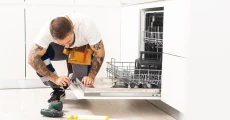

Takeaway
Pump trouble moves through three stages: spotting the symptom, diagnosing the pump or part, and making the repair. Many of these fixes are within a careful homeowner’s reach, from clearing a clog to fitting a new pump. Age is the deciding factor on the bigger jobs. InterNACHI puts the average dishwasher lifespan at about nine years. On a machine near or past that mark, a costly pump repair often points toward a replacement instead.
When the diagnosis is unclear, or the repair means reaching past live wiring and standing water, CLT Appliance Repair can take it from there. We cover Charlotte and the surrounding towns with same-day service seven days a week, on every major brand, and a guarantee backs every repair. Call 704-606-9043 or book online, and get back to full racks of clean dishes without the guesswork.
FAQs
Watch for standing water after a cycle, dishes that come out dirty, or a humming noise with no water moving. Each points to a pump fault once clogs and spray-arm blockages are ruled out. Testing the pump motor for continuity confirms it.
Yes, on many models, if you can cut the power and water, reach the sump, and match the exact part. The job is mechanical rather than dangerous, once the power is off. Tight built-in installs and control-board faults are better left to a technician.
Standing water usually means the dishwasher is not draining. The cause is often a clogged filter, sump, or drain hose rather than the pump itself. Clear the drain path first, and if water still will not leave, the drain pump has likely failed.
No, running it with a leaking pump can put water near live wiring, and a jammed pump can overheat the motor. Continuing to run a grinding or humming pump also risks further damage. Stop using the machine until the pump is repaired or replaced.
Don't let a malfunctioning dishwasher disrupt your daily life. Contact CLT Appliance Repair today at 704-606-9043 to schedule your dishwasher repair service.
We'll have your dishwasher back to optimal performance in no time!
Appliance Repair Indian Land SC | Appliance Repair Indian Trail NC | Appliance Repair Pineville NC | Appliance Repair Rock Hill SC | Appliance Repair Belmont NC | Appliance Repair Matthews NC | Appliance Repair Lancaster SC | Appliance Repair Cornelius NC | Appliance Repair Fort Mill SC | Appliance Repair Concord NC | Appliance Repair Denver NC | Appliance Repair Monroe NC | Appliance Repair Mooresville NC | Appliance Repair Harrisburg NC | Appliance Repair Lake Wylie SC | Appliance Repair Huntersville NC | Appliance Repair Kannapolis NC | Appliance Repair Mint Hill NC | Appliance Repair Waxhaw NC | Appliance Repair Troutman NC | Appliance Repair Davidson NC | Appliance Repair Gastonia NC | Appliance Repair Charlotte NC