Microwave Door Switch Problems: A Comprehensive DIY Guide
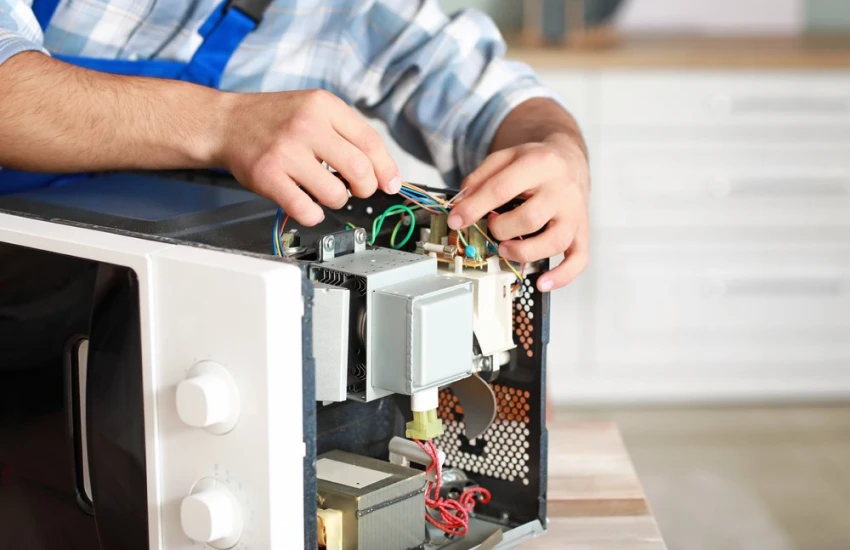
Did your microwave stop heating, or shut off the moment you pressed start? A failing door switch is one of the most common reasons. These switches sit in the door frame and confirm the door is fully shut before the oven sends power to the heating circuit.
Most microwaves rely on three of these switches working together. About 96% of American homes keep a microwave, and 99% of those use it every week. Years of daily opening and closing wear them out, and worn switches are behind most no-heat and no-start faults.
Microwave door switch problems are usually fixable at home. The one real risk is the high-voltage capacitor inside the cabinet, and it makes safety the first step.
Your fridge is a kitchen superstar as it keeps all your food fresh and drinks cold.
But does the fridge feel warm when you open it?
Is there water all over the floor?
Fridge issues are the worst!
How the Door Switches Keep You Safe
The door switches are not just an on/off control. They form the microwave’s main safety system, and they decide whether it can heat at all. The FDA requires every microwave to have two independent interlock systems that stop the microwave the moment the door opens, plus a monitor that shuts the oven down if either interlock fails. Together, those switches keep microwave energy sealed inside the cabinet.
Most microwaves use three switches, and each one has a distinct job.
Switch | What it does | When it fails |
Primary interlock | Cuts power to the heating circuit the instant the door opens | The microwave runs but will not heat |
Secondary interlock | Backs up the primary and blocks heating until the door is fully latched | The microwave will not start, or stops mid-cycle |
Monitor switch | Monitors the other two and blows the fuse if either sticks closed | The fuse blows, often the moment the door shuts |
Key Point: Never bypass or tape down a door switch to force the microwave to run. Those switches shut the microwaves off the instant the door opens. Disable one, and the oven can run with the door open and leak energy into the room.
Before You Open the Microwave
This is where a microwave differs from every other appliance. Inside the cabinet sits a capacitor that stores a high-voltage charge, and it holds that charge long after the microwave is unplugged.
- Danger: Microwave high-voltage components can carry up to 4,000 volts, and the capacitor keeps that charge even after the microwave is unplugged. Contact with it can be fatal. The capacitor has to be discharged with an insulated tool before any hands-on work. Anyone who is not trained to do that safely should stop here and call a professional.
One more rule comes directly from the FDA. When a microwave runs with the door open, stop using it at once. That fault means the oven can leak energy, and it calls for a professional or a replacement rather than a DIY repair.
Top Microwave Door Switch Problems
Each fault below points to a specific switch or part. The symptom tells you where to look first, and every fix assumes the microwave is unplugged and the capacitor is discharged.
Problem 1: The Microwave Runs but Never Heats
The display lights up, the fan runs, and the turntable spins, but the food comes out cold. This is the most common door switch fault, and it points to the primary interlock. That switch feeds power to the heating circuit. When it fails open, the control side of the microwave keeps working while the heating side receives no power.
How to Confirm It
- Remove the grille and control panel to reach the switches.
- Set a multimeter to continuity and test the primary interlock.
- The switch should show continuity when the door is closed and none when it is open.
- Replace it if it fails either check.
Leave this to a pro if you cannot discharge the capacitor safely. That single step carries the real danger in the repair.
Problem 2: The Microwave Will Not Start
Pressing start does nothing, even with the door closed. The secondary interlock is the usual cause. This switch backs up the primary and holds the start signal until the door is fully latched. When it sticks open, the microwave never registers a closed door.
Begin with the door itself. Doors that sit slightly out of line may not press the switch all the way. If the door closes flush and the fault stays, test the secondary interlock for continuity the same way you tested the primary. Replace the switch if it does not close the circuit with the door shut. When a new switch still does not fix the fault, the control board or the door alignment may be the cause, and that is worth a technician’s diagnosis.
Problem 3: The Fuse Blows and the Microwave Loses Power
The microwave loses all power. No display, no light, no response at the door. In most cases, the line fuse has blown, and the monitor switch is the reason.
Here is the sequence behind it:
- The primary or secondary switch sticks closed instead of opening with the door.
- The monitor switch detects the fault and blows the line fuse.
- The microwave shuts down fully to prevent operation with an unsealed door.
Replacing only the fuse rarely holds. The fuse blows again as soon as the stuck switch is triggered. The lasting fix means finding and replacing the switch that failed first. This one is best handed to a technician, since it combines a blown fuse, a stuck interlock, and the high-voltage capacitor in a single job.
Problem 4: Broken Door Latch Tabs
The plastic hooks on the door press the switches when it closes. Years of daily use crack or snap these tabs. Once a tab breaks, it no longer reaches its switch, and the microwave reads the door as open even when it is shut. The symptoms match a failed switch, yet the switches themselves test fine.
The Fix
- Remove the door or the inner door panel to reach the latch assembly.
- Release the broken latch assembly from its mounts.
- Fit a replacement assembly that matches the model number.
- Reassemble the door and check that the tabs press each switch firmly.
When to call a pro: Built-in and over-the-range microwaves make door removal awkward, and a technician can swap the latch without straining the mounting.
Problem 5: Worn or Sticking Switch Contacts
Each switch clicks thousands of times over the life of a microwave. The metal contacts inside wear down, pit, or stick in place. Worn contacts often work one minute and fail the next, and the heating cuts in and out during a cycle. Intermittent faults like these usually mean the switch is near the end of its service life.
- Tip: Replace all three switches at once when the microwave is several years old. They wear at a similar rate, and a second failure often follows the first within months.
Testing an intermittent switch is difficult, since the fault may not appear during a continuity check. When a switch tests fine but the heating still cuts out, replacing it is the practical next step. If the heating keeps dropping after a new switch, the control board may be failing, and that calls for professional testing.
Problem 6: Loose or Corroded Wire Connections
The switches connect to the microwave with small spade terminals. Heat and vibration loosen these connectors over time, and moisture can corrode them. Even a switch in good condition will not work if its terminal is loose or dirty. The circuit breaks at the connection rather than the switch.
Inspect each connection while the microwave is unplugged and the capacitor is discharged:
- ✓ Push each spade terminal firmly back onto its tab.
- ✓ Look for green or white corrosion on the metal.
- ✓ Clean corroded terminals with fine sandpaper or contact cleaner.
- ✓ Replace any connector that is burnt or badly pitted.
Reseating and cleaning the connections often restores normal operation without a new switch. This is the most approachable of the six faults, though the capacitor still has to be discharged first.
When to Bring In a Professional
Some microwave door switch problems are better left to a technician from the start.
- The capacitor makes you uneasy, or you have no safe way to discharge it.
- Fuses keep blowing even after a switch replacement, which points to a deeper fault.
- Built-in or over-the-range units add weight and awkward access to the job.
- The oven runs with the door open, a safety problem well beyond a switch swap.
This is exactly why CLT Appliance Repair handles most microwave switch work directly. Our factory-trained, EPA-certified technicians discharge the capacitor safely, test all three switches, and confirm the door seals before the oven goes back into service. Same-day service runs seven days a week on every major brand.
Call 704-606-9043 or book online whenever the safer move is to hand it over.
Getting Your Microwave Back to Work
The door switch is a small part with a large job. It tells the microwave the door is sealed before any heat begins, and a worn or broken one is behind most no-heat, no-start, and blown-fuse faults. Many of these repairs can be done at home, from a continuity test to a new latch assembly. The high-voltage capacitor is the line that separates a safe DIY fix from a job for a professional.
When that line gives you any pause, CLT Appliance Repair can take it from there. Same-day service runs seven days a week across Charlotte and the surrounding towns, on every major brand, and a satisfaction guarantee backs every repair.
FAQs
Running without heating usually points to a failed primary interlock switch. The light, fan, and turntable still work, since they run on a separate circuit from the heating side. The bad switch cuts the heat, and the food stays cold.
Yes, but only if you can discharge the high-voltage capacitor safely and use a multimeter. The switch itself is inexpensive and easy to swap. The capacitor is the real hazard. It holds a dangerous charge even when the microwave is unplugged.
The switch itself usually runs from 5 to 20 dollars, one of the least expensive microwave parts. Professional replacement adds labor and the safe capacitor discharge. On an older or low-cost microwave, replacing the whole unit can make more sense.
No, running the microwave with a bad switch can leave the door not fully sealed, which risks energy leakage. It may also blow the fuse or refuse to start. Stop using the oven until the switch is repaired or replaced.
Don't let a malfunctioning Microwave disrupt your daily life. Contact CLT Appliance Repair today at 704-606-9043 to schedule your oven repair service.
We'll have your Microwave back to optimal performance in no time!
Freezer Repair Indian Land SC | Freezer Repair Indian Trail NC | Freezer Repair Pineville NC | Freezer Repair Rock Hill SC | Freezer Repair Belmont NC | Freezer Repair Matthews NC | Freezer Repair Lancaster SC | Freezer Repair Cornelius NC | Freezer Repair Fort Mill SC | Freezer Repair Concord NC | Freezer Repair Denver NC | Freezer Repair Monroe NC | Freezer Repair Mooresville NC | Freezer Repair Harrisburg NC | Freezer Repair Lake Wylie SC | Freezer Repair Huntersville NC | Freezer Repair Kannapolis NC | Freezer Repair Mint Hill NC | Freezer Repair Waxhaw NC | Freezer Repair Troutman NC | Freezer Repair Davidson NC | Freezer Repair Gastonia NC | Freezer Repair Charlotte NC